

Ever wondered who the Richest African Musicians are? Well, we got you covered. Africa is a continent which is endowed with many good things. Among the vast majority of endowments is its music industry. The entertainment industry is a major contributor to the Gross Domestic Profit of many developing countries in Africa.
After several hours of research and digging, all in the quest of compiling an accurate and comprehensive list of the top ten richest musicians in Africa, we were able to get the following. Their net worth was taken into consideration and this includes their endorsement deals as many of them are ambassadors of different brands. 
Below is a list of Richest African Musicians and we will discuss what makes them tick and how they found their success.
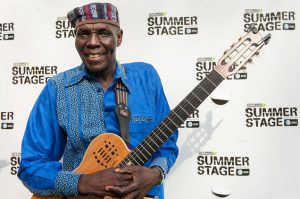
10. The Late Oliver Mtukudzi
A veteran in the African music industry who successfully released over 65 albums. He is a Zimbabwean by the origin and was very successful in his music career with more than 41 years of experience. A musician, philanthropist, businessman and UNICEF ambassador for goodwill in the Southern African Region. He bagged several awards numbering over twenty.
Oliver Mtukudzi has an estimated net worth of 1.2 million dollars.
9. Jidenna
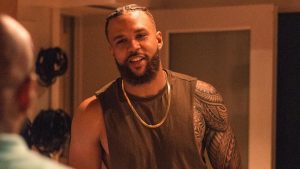
Jidenna is a Nigerian – American singer who was born on the 4th May 1985. He is signed to Wondaland Records, Epic records and Fear and Fancy records. He is a singer, rapper, songwriter and music producer. He released two major singles “Classic Man” and “Yoga” in the year 2015. That same year, his single “Classic Man” won awards of “Song of the Year” and “Video of the Year” at the Soul Train Music Awards.
Jidenna has an estimated net worth of 1.4 million dollars.
8. The Late Hugh Masakela
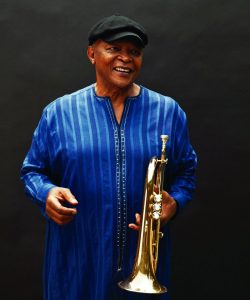
Hugh Masekela is and was the second richest artist in South Africa. Hugh Masekela rocked South Africa’s music industry with constant releases. He worked productively in his own record company, had many honorary prizes and was nominated for a Grammy Award. He died on January 23. He was a South African trumpeter, composer and singer. Hugh was popularly referred to as “The Father Of South African Jazz” and he is always in the heart of many lovers of Jazz music in South Africa. Even after his death, he is still the eighth on our list.
Hugh Masakela has an estimated net worth of 1.5 million dollars.
7. Tinashe
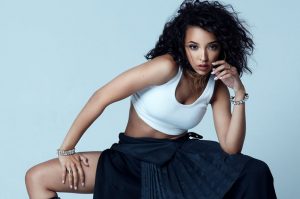
This is another wonderful and wealthy musician from the African continent. Being the only female on our list means she has been successful in her music career. She is an American singer who was born in Lexington, Kentucky to Zimbabwean parents, Professor Michael Kachingwe and his wife Aimie Kachingwe. Tinashe Jorgensen Kachingwe is a singer, songwriter, producer, dancer, fashion model and actress. She is currently signed to Konvict music.
Tinashe has an estimated net worth of 6 million dollars.
6. Sarkodie
Sarkodie is a talented rapper and obviously one of the best rappers in the African music industry. He hails from Ghana and was born on the 10th of July 1988. His real name is Michael Owusu Addo but popularly known and fondly addressed by his stage name Sarkodie. He is currently signed to his record label Sarkcess music. He is a rapper, recording artist and an entrepreneur.
Sarkodie currently has five albums in his career and has often been called one of Africa’s greatest hip-hop artistes by prominent sources like MTV Base, Lynx Tv and AfricanHype.com
Sarkodie has an estimated net worth of 7 million dollars.

5. Davido
David Adedeji Adeleke is a Nigerian artiste and son to a Nigerian billionaire Mr. Adeleke. He was born in Atlanta Georgia, USA but later relocated to Nigeria. He is popularly known and called by his stage name Davido. He is a successful musician, singer, songwriter and producer. He has many award nominations, has won many awards and has profitable endorsements to his name. Some of his awards are Headies award, BET and others. Davido was once an ambassador for MTN (a telecommunications giant in Africa), Guinness and is currently an ambassador for Infinix mobile (a smartphone company based in Hong Kong) among others.
He is signed to Sony Music and is the CEO of his own record label.
Davido has an estimated net worth of 16 million dollars.

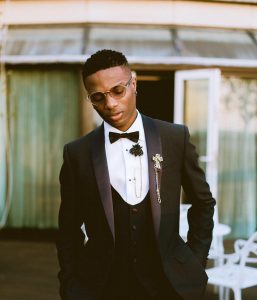
4. Wizkid
Ayodeji Ibrahim Balogun popularly known by his stage name Wizkid or sometimes called Starboy is a Nigerian singer and songwriter. He hails from Surulere, Lagos State in Nigeria and was born on the 16th of July 1990. Wizkid gained prominence in the music space in the year 2010 with the release of his song “Holla at your boy” with the Empire Mates Entertainment label.
He also gained international recognition in 2016 with his song titled “One Dance” in which he featured Drake. The song reached number one on music charts in more than fifteen countries including the United States of America, United Kingdom, Australia and Canada. It can be said that Wizkid is one of the successful and wealthy musicians in Africa.
Wizkid has an estimated net worth of 20 million dollars.
3. Don Jazzy
Michael Collins Ajereh is a native of Delta State in Nigeria and was born on the 26th of November 1982 making him 37 years of age. He is the founder and boss of his own record label called Mavin Records (Supreme Mavins Dynasty). Don Jazzy was the co-founder of the defunct Mo hits records which had big artistes like Dbanj and Wande Coal.
Mavins record has produced some of the biggest artistes in the Nigerian music space such as Tiwa Savage, Reekado Banks, Korede Bello, DNA twins, Dija, Rema, etc. He is a producer, songwriter, singer and businessman and has investments in real estate and production of Wi-fi.
Don Jazzy has an Estimated net worth of 30 million dollars.

Also Read: Top 10 Richest Countries in Africa 2020
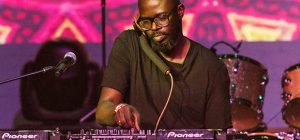
2. Black Coffee
Black Coffee is a South African by origin and was born on the 11th of March 1976. He is currently signed to a record label called Soulistic Music. His real name is Nkosinathi Innocent Maphumulo. Black Coffee is a Disc Jockey (DJ), songwriter, producer as well as a singer. He started his career in the year 1995, created his own record label and successfully released five albums.
He became popular after being picked as a participant for the Red Bull Music Academy in 2004 which took place in Cape Town. After achieving this milestone, he added another feather to his cap by winning the “Breakthrough DJ of the Year” award at the DJ Awards in Ibiza. This event occurred some weeks after he released his fifth music album.
Black Coffee has an estimated net worth of 60 million dollars making him one of the richest African musicians.
1. Akon
Akon’s real name is Aliaume Damala Badara Akon Thiam born to Mor Thiam (father) and Kin Gueye Thiam (mother). He has dual citizenship as he was born in St Louis Missouri, United States of America but also spent part of his life in Senegal.
He is a successful singer, producer, songwriter, actor, entrepreneur and philanthropist. The CEO of Konvict Music, a record label which he is signed to currently. He also produced songs for International artistes such as Michael Jackson, Whitney Houston, Snoop Dogg, Leona Lewis, Sean Paul and Lionel Richie. As a five-time Grammy award nominee and over 35 million albums sold out, we can conclude that he has had a successful music career in Africa.
Akon has an estimated net worth of 80 million dollars.

From the foregoing, you can see that the African music industry has gone very far. These artists have also made an impact not just within their continent but in the global entertainment scene. There are a lot of stars who are looking to displace the ones on the list and it will surely happen someday in the circle of life. Until then, we say kudos to those that have made it to our list.
Top 10 Richest African Musicians
- Akon: 80 million dollars
- DJ Black Coffee: 60 million dollars
- Don Jazzy: 30 million dollars
- Wizkid: 20 million dollars
- Davido: 16 million dollars
- Sarkodie: 7 million dollars
- Tinashe: 6 million dollars
- The Late Hugh Masakela: 1.5 million dollars
- Jidenna: 1.4 million dollars
- The Late Oliver Mtukudzi: 1.2 million dollars
IF YOU LIKED OUR RICHEST AFRICAN MUSICIANS PLEASE SHARE AND COMMENT BELOW



MUSIC
Li63rty Embraces Vulnerability and Warm Afro Pop Rhythms With Roxy on Her Romantic New Single “Without Your Love”

Li63rty has built her sound around golden-era hip-hop influences, sharp wordplay and soulful production, with lyrics that move between street life, love, loss, ambition, spirituality and personal growth. Her confident delivery is grounded in reflection, and she often draws on her own experiences to explore resilience and self-discovery. That sense of independence reaches beyond the studio. Through writing and entrepreneurship, she has made ownership and empowerment central to her creative outlook, encouraging listeners to push past limitations and live on their own terms.
On “Without Your Love,” however, she lets a different side of that personality come forward. Leaving behind the grit of Brooklyn drill and the hard edges of boom-bap, Li63rty settles into a warmer blend of Afro-pop and R&B. Singer Roxy joins her on the track, lending a soulful melodic hook that gives the song much of its emotional pull.
The production has an easy, sunlit warmth, though there is something quietly introspective about its mood. An infectious drum groove provides the foundation, while bright synth accents add movement and colour. The syncopated rhythm makes it easy to imagine the song playing at a party, but its unhurried pace is equally suited to a late-night drive.
This is Li63rty’s first official move into Afrobeat, and the shift feels comfortable rather than forced. The accompanying cinematic music video extends the song’s focus on devotion and loyalty, exploring the emptiness that can come with imagining life without the person you love.
Roxy handles the melodic centre with an airy, hypnotic vocal performance. Li63rty responds in a conversational flow, easing back from the aggression that often shapes her rap delivery. Her verses give the groove room to breathe, yet retain the Brooklyn confidence that defines her work. The contrast between Roxy’s smooth singing and Li63rty’s measured cadence helps the arrangement feel cohesive.
At its heart, “Without Your Love” is a direct expression of deep devotion and affection. The line “where would I be without your love.” captures the question running through the track. There is little posturing here. Li63rty sounds willing to admit just how much one person can mean to her, and that openness brings a welcome tenderness to the song.
The result is warm, romantic and uplifting, with a late-summer feel that suits its easygoing production. It can sit comfortably in the background while driving or relaxing, then come alive when the rhythm draws people onto the dance floor. For an artist usually associated with a harder hip-hop sound, “Without Your Love” offers an appealing change of pace and a convincing glimpse of her range.
“Without Your Love” is now streaming everywhere.
MUSIC
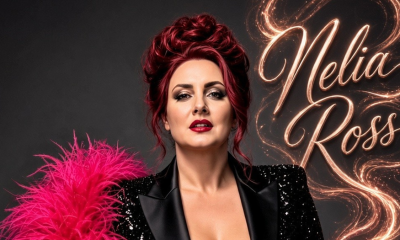
Nelia Ross Embraces Raw Pop Rock Vulnerability on “Unknown Man” as She Enters a New Chapter for GRAMMY Consideration

For longtime listeners, Nelia Ross has built a reputation as a versatile Italian international artist working at the meeting point of classical vocal technique, contemporary songwriting, and theatrical performance. A crossover operatic soprano, accomplished pianist, composer, and songwriter, Ross carries a powerful, expressive voice that lets her move between opera, pop, and rock while retaining the emotional weight of her classical background. Her international career, spanning Europe and the United States, has placed her on orchestral stages, alongside world renowned artists, and within the more intimate setting of her own original work.
She returns with another accomplished performance on “Unknown Man,” a raw, emotionally heavy pop-rock ballad that deliberately pulls away from the polished classical crossover sound often associated with Ross. In its place is something grittier and closer to the nerve. The song has been submitted for consideration at the 69th Annual GRAMMY Awards in the categories of “Song of the Year,” “Record of the Year,” “Rock Song,” “Rock Performance,” and “Arrangements, Instruments and Vocals.” At the center of it is a performance shaped by technical control, but driven by vulnerability.
“Unknown Man” represents a clear stylistic turn toward a rawer pop-rock space. Lyrically, Ross focuses on the longing to connect with a mysterious, distant figure who carries deep emotional significance. Vulnerability and intimacy sit at the heart of the song, along with the quiet courage involved in opening oneself to a fragile connection and hoping that something uncertain might become lasting.
The track steps away from electronic loops and heavy dance syncopation. Its foundation is organic and atmospheric, with electric guitar taking a prominent role alongside cello, bass, and drums. Backing vocals from various singers support Ross without crowding her emotionally charged lead. The pacing remains deliberate, with a mid-tempo pulse giving the song enough structure to move forward while leaving space for its emotion to gather naturally.
The arrangement expands and contracts with that feeling. Sparse, quieter passages gradually give way to larger full-band crescendos, creating a sense of scale without losing the song’s intimacy. Real instrumentation remains central. Sweeping, cinematic strings recall Ross’s classical roots, while electric guitar, piano, and cello give shape to the track’s climactic passages and add weight to its darker atmosphere.
As a trained dramatic soprano, Ross approaches the performance from a different angle than strict operatic theater. Her verses can feel tender, breathy, and close to the microphone, then open into soaring belts when the choruses arrive. That contrast shows the depth of her control, though the most affecting moments are often the less polished ones. The “aches” and textural cracks of the performance are allowed to remain audible, giving the vocal a lived-in quality instead of sanding everything down into pitch-perfect digital smoothness.
The result feels closer to a dramatic stage soliloquy than a pristine studio exercise. There is a high-stakes quality to the delivery, drawing from the emotional gravity of a live, un-ironic classic rock ballad. Ross leans fully into the song’s tension, and the performance gains its force from that willingness to sound exposed.
Conceptually, “Unknown Man” keeps returning to yearning, vulnerability, and the uneasy space between emotional safety and deeper intimacy. Its central conflict comes from opening one’s heart to someone distant and mysterious, then hoping that a brief spark can survive long enough to become something real.
Taken as a whole, “Unknown Man” is cinematic, haunting, and intensely passionate. Its dramatic sweep recalls the theatrical scale of a classic 90s power ballad, while its emotional framing carries the darker vulnerability of contemporary pop. The mood is melancholic, yet there is a sense of bravery in the hope running through it.
“Unknown Man” is not Ross’s only entry this season. She has also submitted two original songs, “Soul” and “Uniti se distanti”, for official GRAMMY consideration for Pop Solo Performance/Arrangements, and Instruments and Vocals respectively.
Stream “Unknown Man” here and let us know if you feel that it is GRAMMY worthy.
Connect with Nelia Ross
Official Website
YouTube
Instagram
Facebook
Spotify
Apple Music
MUSIC
Digital Guts Builds a Restless Genre Bending World From Anonymity, DIY Instinct, and Sonic Experimentation on “Digital Guts”

Screenshot
Originally from Michigan and now based in Philadelphia, Digital Guts is an artist who embraces anonymity, keeping attention on the music rather than the person behind it. That sense of mystery fits naturally with a deeply DIY approach. The self-titled 7-track album “Digital Guts” is a fascinating, genre-bending project, connecting an underground electronic and emo aesthetic with experimental, sample-heavy instrumental structures. The result feels committed to sonic exploration, with arrangements that resist cookie-cutter formulas and a production style that shifts deliberately from one track to the next.
Opener “Angels Ball Out” sets the record in motion with a grand introduction. Its beat leans heavily on clever, layered sampling, creating a textured foundation that feels nostalgic while remaining distinctly underground. The rhythm settles into a smooth, loop-centered hip-hop bounce. It functions almost like an overture, especially once the album reaches its final track, “Bye Bye,” which cleverly returns to “Angels Ball Out” through a full-circle structural reverse play. Weightless, ethereal, and triumphant, the opener creates a cinematic entryway into the album’s universe.
The second track, “Goth Girl,” moves directly toward darker alternative subcultures, driven by a shadowy trap bounce and alluring vocals. A deeply calming, hypnotic instrumental backdrop balances the vocal loop, while the rhythm stays slow, deliberate, and swaying. Much of the vocal cadence circles around one lingering question, “What you see in me?” At a faster tempo, that repetition might become tedious. Here, it works beautifully, drawing a comparison to Rihanna’s “Pour It Out,” filtered through a more gothic atmosphere.
What comes through is deep longing, melancholia, and romantic fixation. The restrained beat strengthens the sense of emotional vulnerability and keeps the listener absorbed in the atmospheric space surrounding the voice.
Third track “Broken” marks a huge sonic pivot. The smooth sampling falls away as the production dives headfirst into aggressive electronic hip-hop, powered by high-energy UK drum and bass patterns. The rhythm is high-octane, frenetic, and relentless. Its chaotic cadence recalls early The Prodigy and the aggressive electronic-punk style associated with Wargasm UK.
The mood is erratic, anxious, and explosive. “Broken” captures the sensation of mental fracturing or inner chaos, pushing the album’s energy suddenly into overdrive.
Another standout from the album is “cryonme,” easily its most experimental and polarizing track. The production is intensely maximalist, with so many elements moving at once that the beat can feel intentionally at odds with the underlying tone. Its eccentric layering carries a distinct art-pop Gorillaz influence, while hyper-pulsating electronic details become one of the track’s defining characteristics.
The rhythm is disjointed and constantly shifting. “cryonme” is among the album’s more lyric-driven moments, asking the listener to follow the vocal cadence through a maze of competing instrumental sounds. The mood is melodramatic, eccentric, and overwhelming. It resembles emotional overload poured into a blender, producing a surreal and slightly chaotic listening experience.
“Dreams” is a synthetic masterpiece, hauntingly beautiful throughout and capable of leaving a desirable aftertaste long after its final notes fade.
This, ladies and gentlemen, is the story of Digital Guts’ “Digital Guts,” streaming now on popular digital platforms.
Connect with Digital Guts
-
 MUSIC2 months ago
Gospel Artist Harmoni Allen Confronts Mental Health Stigma With Vulnerability Faith and Soul on Her Powerful Single “Schitzo”
-
 MUSIC2 months ago
Serag Baddar Revisits a Teenage Guitar Idea With Intimacy and Patience on the Atmospheric Post Rock Track “Limerence”
-
 MUSIC2 months ago
Omer B Channels Groove, Speed, and Collaborative Fire on the Exhilarating Funk Rock Instrumental “Bending Time”
-
 MUSIC2 months ago
Digital Guts Builds a Restless Genre Bending World From Anonymity, DIY Instinct, and Sonic Experimentation on “Digital Guts”
-
 MUSIC1 month ago
Nelia Ross Embraces Raw Pop Rock Vulnerability on “Unknown Man” as She Enters a New Chapter for GRAMMY Consideration
-
 MUSIC2 weeks ago
Li63rty Embraces Vulnerability and Warm Afro Pop Rhythms With Roxy on Her Romantic New Single “Without Your Love”


