
MUSIC
Debuting Her First Ever Single Alyse Diane Keeps the Hopes and Dreams Alive With the Inspiring Hip-Hop Tune “On My Litty Board”


Dreams are what move us and though sometimes we may fall short on our dreams, giving up should never be an option- this is the true and inspiring story of an upcoming singer-songwriter, rapper, and entrepreneur Alyse Diane who has been through it all and managed to come out of the other side victorious. She turned her frustrations into motivation, seeking to pull herself out of the inhibiting mud, and swore to make herself better and girl has she done that! We are now talking about her debut single which so happens to carry a lot of dreams with it seeing as it is the theme song to her product ‘THE LITTY BOARD’ which is the 1st luxury vision board inspired by hip-hop culture. This is more than just a dream; this is what success looks like in essence. This is what captains of commerce, great masters of the arts, visionaries of the sciences, heroes of humanities, and giants of athletics have all done to succeed. On this project, she collaborated with rapper Canteen and her cousin singer Jenna Bryant and the end result is a culturally rich inspiring tune that will be a feast for the senses of listeners everywhere.


Brimming with incredible creativity and intensively bold inspiration, Canteen offers an epic sensuality with the way his rich and flavorful vocals cut through the song’s chorus and the catchy hooks which are the capstone of this intriguingly well-crafted song. The lady of the hour Alyse Diane comes through too on the hook and verse 2 making her claim to the intimately and exploding inviting mix oozing from the strongly mixed hip-hop instrumentations as she details true story lyrically in her female rap-singing versatility. Some of the lyrics include “I can’t work for them folk, cuz they don’t like me…” and “I been getting in the know all nightly…” her lyrical delivery carries so much wisdom that it does not matter where you are at right now, no matter how ugly or difficult the situation may seem, with determination and the right frame of mind, that thing you going for is yours for the taking. No matter what, don’t stop until you get what is rightfully yours!
Jenna Bryant keeps the track at an all-time hypnotic high with her sultry and silky vocals on verse 3 establishing her own unique musical identity brilliantly. The whole of this project is a success and the way the 3 artists come together to design a motivational and maturely written piece backed by sweep, fly, and bouncing melodies and heartfelt delivery is the mark of ascertained maestros. Alyse Diane is just getting started and she is here to succeed if this debut track serves as an indication, her future in the music industry is assured and will exactly be as she desired it in her wildest dreams. “On My Litty Board” is available for streaming on all digital streaming platforms and it is only fair that a listener gets to share in and experience what dreams are made of. Let’s go!
Catch Up With Alyse Diane on:






MUSIC
Digital Guts Builds a Restless Genre Bending World From Anonymity, DIY Instinct, and Sonic Experimentation on “Digital Guts”

Screenshot
Originally from Michigan and now based in Philadelphia, Digital Guts is an artist who embraces anonymity, keeping attention on the music rather than the person behind it. That sense of mystery fits naturally with a deeply DIY approach. The self-titled 7-track album “Digital Guts” is a fascinating, genre-bending project, connecting an underground electronic and emo aesthetic with experimental, sample-heavy instrumental structures. The result feels committed to sonic exploration, with arrangements that resist cookie-cutter formulas and a production style that shifts deliberately from one track to the next.
Opener “Angels Ball Out” sets the record in motion with a grand introduction. Its beat leans heavily on clever, layered sampling, creating a textured foundation that feels nostalgic while remaining distinctly underground. The rhythm settles into a smooth, loop-centered hip-hop bounce. It functions almost like an overture, especially once the album reaches its final track, “Bye Bye,” which cleverly returns to “Angels Ball Out” through a full-circle structural reverse play. Weightless, ethereal, and triumphant, the opener creates a cinematic entryway into the album’s universe.
The second track, “Goth Girl,” moves directly toward darker alternative subcultures, driven by a shadowy trap bounce and alluring vocals. A deeply calming, hypnotic instrumental backdrop balances the vocal loop, while the rhythm stays slow, deliberate, and swaying. Much of the vocal cadence circles around one lingering question, “What you see in me?” At a faster tempo, that repetition might become tedious. Here, it works beautifully, drawing a comparison to Rihanna’s “Pour It Out,” filtered through a more gothic atmosphere.
What comes through is deep longing, melancholia, and romantic fixation. The restrained beat strengthens the sense of emotional vulnerability and keeps the listener absorbed in the atmospheric space surrounding the voice.
Third track “Broken” marks a huge sonic pivot. The smooth sampling falls away as the production dives headfirst into aggressive electronic hip-hop, powered by high-energy UK drum and bass patterns. The rhythm is high-octane, frenetic, and relentless. Its chaotic cadence recalls early The Prodigy and the aggressive electronic-punk style associated with Wargasm UK.
The mood is erratic, anxious, and explosive. “Broken” captures the sensation of mental fracturing or inner chaos, pushing the album’s energy suddenly into overdrive.
Another standout from the album is “cryonme,” easily its most experimental and polarizing track. The production is intensely maximalist, with so many elements moving at once that the beat can feel intentionally at odds with the underlying tone. Its eccentric layering carries a distinct art-pop Gorillaz influence, while hyper-pulsating electronic details become one of the track’s defining characteristics.
The rhythm is disjointed and constantly shifting. “cryonme” is among the album’s more lyric-driven moments, asking the listener to follow the vocal cadence through a maze of competing instrumental sounds. The mood is melodramatic, eccentric, and overwhelming. It resembles emotional overload poured into a blender, producing a surreal and slightly chaotic listening experience.
“Dreams” is a synthetic masterpiece, hauntingly beautiful throughout and capable of leaving a desirable aftertaste long after its final notes fade.
This, ladies and gentlemen, is the story of Digital Guts’ “Digital Guts,” streaming now on popular digital platforms.
Connect with Digital Guts
MUSIC
Gospel Artist Harmoni Allen Confronts Mental Health Stigma With Vulnerability Faith and Soul on Her Powerful Single “Schitzo”

Right now, gospel artist Harmoni Allen’s work reflects the transformative power of faith, with vulnerability, triumph, encouragement, and Christ-centered hope running through her music. Her warm vocals, expressive delivery, and deeply personal storytelling give that message a human center. Drawing from lived experience and testimony, she turns questions of faith, healing, freedom, resilience, and hope into songs that feel intimate without losing their uplifting spirit.
Harmoni Allen’s “Schitzo” is a sincere, soul-stirring track built around a deeply personal subject. Short for schizophrenia, the song opens an intimate conversation about mental well-being, judgment, fear, vulnerability, and the struggle to feel free in a world that can be quick to define people from the outside. Harmoni does not keep the subject at a safe distance. She brings the listener directly into the experience, shaping the song as a confession that feels immediate and exposed.
The accompanying music video establishes that vulnerability from its opening moments. Harmoni sits alone on her front porch, drinking water, visibly troubled and seemingly asking herself whether she is truly okay. Nearby, two women watch her from a distance. Their expressions communicate the judgment and assumptions that sit at the center of the song. Without speaking, they capture a painful reality: people can decide who someone is before taking the time to understand what that person may be going through.
Looking for answers, Harmoni calls a friend and heads to a hospital. The song then unfolds inside a psychiatrist’s office, where she is asked, “So, Miss Allen, what brings you to my office today?” Her answer becomes the emotional core of “Schitzo.” The music takes over, developing into a slow-burning, soulfully rich R&B confession carried by Harmoni’s heavenly, deeply vulnerable vocals.
Verse by verse, Harmoni reveals the strain of living under the gaze of people who may fear, misunderstand, or judge what they cannot see. She sings about people being scared of her, watching from afar, the medicines she takes, and the exhausting burden of being viewed through a label instead of recognized as a human being. Inside that pressure, however, comes a moment of release. She looks into the mirror, sits on the bed, takes a breath, and arrives at the realization that she is free.
That realization does not magically change the world around her. People still look at her the same way. Their assumptions remain. This is where “Schitzo” broadens into something many listeners can recognize, the understanding that other people’s perceptions do not get to define your identity, your worth, or your destiny.
Harmoni’s faith gives that idea its foundation. Beneath the emotional turbulence is a steady conviction that God has the last say. People may judge from afar, attach labels, and make assumptions based on appearance, yet those opinions do not determine the course of someone’s life. For Harmoni, faith creates a space where judgment begins to lose its hold and freedom becomes possible.
Musically, “Schitzo” carries the same emotional weight as its subject. The production settles into a slow-burning R&B groove that gives Harmoni’s voice room to breathe, ache, and communicate. Her soulful delivery has a nostalgic warmth, while smooth layers of vocal harmony wrap around the lead with an almost heavenly glow. The arrangement remains restrained, keeping the storytelling in clear focus instead of crowding it with unnecessary drama. Harmoni shifts naturally between fragility and quiet strength, making the performance feel close enough to resemble a private conversation across the room.
“Schitzo” ultimately centers on being seen, being misunderstood, finding your breath again, and recognizing that freedom can survive other people’s judgment.
When the final note fades, Harmoni Allen leaves behind the message that has guided the song from the beginning: people may have their opinions, but God has the final say!
Connect with Harmoni
MUSIC
Serag Baddar Revisits a Teenage Guitar Idea With Intimacy and Patience on the Atmospheric Post Rock Track “Limerence”

Based in Malta, composer Serag Baddar turns a long-held guitar idea into something intimate and absorbing on “Limerence.” The post-rock track grew from a riff he wrote 15 years ago, with one section carrying a subtle nod to Buckethead’s “Padmasana,” whose rhythm guitar left a clear impression on Baddar.
Crisp, mellow, and atmospheric, “Limerence” moves through clean guitar layers and an ethereal sense of space. Silken vocals shimmer underneath, adding a restrained melancholy that suggests heartbreak without overwhelming the arrangement.
Baddar’s background in heavy metal remains important to the song, even as he strips away high-gain distortion and conventional vocal delivery. In their place, structure and melody do most of the emotional work. At the center is a clean, melodic guitar riff designed to flow ergonomically across the fretboard, giving the performance a natural physical ease.
The quieter acoustic and clean passages of progressive metal are an obvious reference point. Opeth and Tool, two bands that have shaped Baddar’s style, can be heard in the track’s sense of structure and restraint. Its spacious ambient textures also draw from the accessible melodic soundscapes associated with instrumental artists such as Buckethead. “Padmasana” is especially relevant, with its rhythm guitar inspiring a small section of “Limerence.”
The pacing is deliberate and unhurried, in keeping with post-rock’s slow-burn character. Its rhythmic framework stays steady, patient, and evocative, giving the central guitar melody room to breathe. Notes are allowed to ring out and decay naturally rather than being crowded by unnecessary movement.
Much of the song’s appeal comes from that simplicity. The arrangement avoids excessive time-signature gymnastics and settles into a smooth, approachable cadence that strengthens its hypnotic quality. That choice suits the meaning behind “Limerence,” the intense and involuntary psychological state of romantic obsession and infatuation that Baddar seeks to capture emotionally.
Because the released track is a “demo” mix, it retains a raw, unpolished authenticity. That texture fits Baddar’s philosophy of “writing for dopamine,” prioritizing emotional resonance and the organic “magic” of a creative spark over pristine, heavily compressed commercial engineering.
The result is intimate and thoughtful. It feels reflective and deeply personal, like a bedroom guitarist finally translating a 15-year-old teenage memory into a cohesive, immersive piece of music. The closing stretch brings the song’s crisp, clean, haunting guitar riff into sharper focus, giving the track a fitting climax and reminding us how much of its emotional weight rests on that original idea.
Baddar waited until he felt his technical ability and musical vision had matured enough to do the riff justice before recording and releasing it. He approaches music as a philosophical hobby, creating for the pleasure of the craft rather than under commercial pressure.
Taken as a whole, “Limerence” is an accomplished, carefully felt performance worth spending time with. It is streaming now.
Follow Serag Baddar: Instagram
-

 MUSIC3 months ago
Michael M Jeni Turns Heartbreak Into Self Respect And Quiet Release On New R&B Single “Played”
-

 MUSIC2 months ago
DJ PAPPY’s “Offside Trap” Turns Three Lions Belief Into A Chant Ready World Cup Rallying Cry For England
-
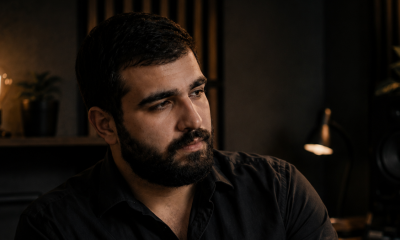
 MUSIC2 weeks ago
Serag Baddar Revisits a Teenage Guitar Idea With Intimacy and Patience on the Atmospheric Post Rock Track “Limerence”
-
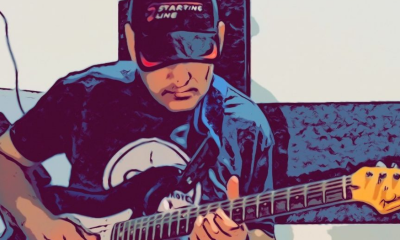
 MUSIC2 weeks ago
Omer B Channels Groove, Speed, and Collaborative Fire on the Exhilarating Funk Rock Instrumental “Bending Time”
-

 MUSIC1 week ago
Gospel Artist Harmoni Allen Confronts Mental Health Stigma With Vulnerability Faith and Soul on Her Powerful Single “Schitzo”
-

 MUSIC5 days ago
Digital Guts Builds a Restless Genre Bending World From Anonymity, DIY Instinct, and Sonic Experimentation on “Digital Guts”


