
MUSIC
Philadelphia-born and Sicklerville-raised, Rich AB Reintroduces Himself in Self Titled Project “Meed”


Rich AB has returned with a purpose, and this time, he’s not just making music—he’s making his voice heard. His new album, Meed, produced by H11dro, is a self-titled project that celebrates his journey of triumph, growth, and self-reclamation. Rooted in his birth name, Abdul Hameed, this project is a raw, unfiltered expression of the man he has become, unapologetically authentic and boldly claiming his space in the industry.
Meed is a testament to Rich AB’s artistry, deeply personal storytelling, and dynamic versatility. From the opening track, “I N D E P E N D E N T,” he makes it clear that he’s here to stay. With a fiery beat and anthemic energy, the track encapsulates his self-reliance and determination, setting the tone for the rest of the album.
Tracks like “On Switch” and “Skilla AB” keep the momentum alive, blending Rich AB’s sharp lyrical prowess with memorable hooks. These songs demonstrate his ability to balance hard-hitting production with his commanding delivery, leaving a lasting impression on listeners.
“Indictment Bop” stands out as the project’s crown jewel. The track’s relentless bars and raw honesty take listeners on a vivid journey throughRich AB’s life, reflecting on the struggles he’s faced and the resilience he’s built. With lyrics like:
“I think I’m a killer, it’s running my family for real / Ruin everything that’s around me, one touch that indictment put me at a disadvantage / Woke up and I pray ‘cause I’m still standing,”
Rich AB weaves a gripping narrative of defiance, vulnerability, and perseverance. Paired with a visually striking music video, this track encapsulates the heart of Meed—a man determined to rise above the system and his past.
“Ways” offers a reflective turn, digging deeper into Rich AB’s thoughts on loyalty, love, and sacrifice. The track’s melodic undercurrent, juxtaposed against its gritty beats, showcases his range as an artist and storyteller. With an accompanying music video set to drop on January 31, 2025, fans can anticipate even greater depth and visual storytelling.
Other highlights, like “YUMMY” and “Muslim First,” delve into his personal identity and values, adding more layers to the album’s overarching narrative. The closing track, “ThankYou Tears,” feels like a heartfelt tribute to those who have stood by him throughout his journey, bringing the project to a poignant and fitting conclusion.
With Meed, Rich AB delivers an impressive and multifaceted body of work that resonates on a deeply emotional and sonic level. His authenticity and storytelling shine through, and standout tracks like “Indictment Bop” and “Ways” firmly establish him as an artist to watch. Rich Ab’s journey is far from over—Meed marks the beginning of an exciting new chapter.
To experience this remarkable project, follow the link below to stream Meed, and stay connected with Rich AB on Instagram to keep up with his inspiring journey.
| INSTAGRAM |

MUSIC
SHANI G Finds a Tender Balance Between Heartbreak and Acceptance on Her Soulful New Trap R&B Single “Crossroads”

Miami, FL, artist SHANI G has shaped her sound around melodic trap R&B and songwriting that feels drawn from the pages of a diary. On earlier releases such as “Comes back around” and “Just For You,” she introduced a voice that can move from exposed emotion to self-assurance and streetwise grit without sounding like she has changed characters. Her delivery is distinctive: soft and airy, often close to spoken conversation, with a lyrical sharpness that keeps even the gentler moments from feeling fragile.
That tension runs through much of her music. Love, heartbreak, loyalty, ambition, independence, and street life all find their way into her songs, but it is the personal angle that gives those familiar themes some weight. Sometimes she holds her feelings at a distance; elsewhere, she lets them come through without much protection. She can move from singing into rapping while keeping the same recognizable voice.
Her new single “Crossroads” leans into the more reflective side of that approach. The production has a clean, polished finish, but it retains the closeness of something made for a late-night listen rather than a crowded room. Soulful melodic details sit over an atmospheric trap backdrop, with the percussion kept deliberately restrained. There are no overpowering club-ready 808s competing for attention. The slower pace gives the instrumental melody space to settle and leaves the emotion of the song in the foreground.
SHANI G works comfortably within that space. Rather than pushing toward dense, rapid-fire verses, she follows a smooth, melodic cadence. Her voice carries the story in an almost conversational way, as though she is putting difficult thoughts into words while they are still fresh. The openness of the performance makes the song feel intimate, with little distance between the person telling the story and the listener hearing it.
At its heart, “Crossroads” is about a relationship reaching a point where two people can no longer continue in the same direction. Love and loss sit alongside the difficult choices that follow a separation. There is sadness in accepting that a shared chapter has ended, but also a tentative willingness to face whatever comes next. That mixture of melancholy and acceptance gives the song its emotional character, making it well suited to quiet, reflective listening.
SHANI G has never seemed particularly interested in staying within one fixed musical persona. Her confidence and sensitivity can coexist, and “Crossroads” finds her giving the latter more room without abandoning the edge in her sound. A relaxed, story-driven music video accompanies the single, with visuals that follow its mood and narrative.
Stream “Crossroads” here.
MUSIC
Li63rty Embraces Vulnerability and Warm Afro Pop Rhythms With Roxy on Her Romantic New Single “Without Your Love”

Li63rty has built her sound around golden-era hip-hop influences, sharp wordplay and soulful production, with lyrics that move between street life, love, loss, ambition, spirituality and personal growth. Her confident delivery is grounded in reflection, and she often draws on her own experiences to explore resilience and self-discovery. That sense of independence reaches beyond the studio. Through writing and entrepreneurship, she has made ownership and empowerment central to her creative outlook, encouraging listeners to push past limitations and live on their own terms.
On “Without Your Love,” however, she lets a different side of that personality come forward. Leaving behind the grit of Brooklyn drill and the hard edges of boom-bap, Li63rty settles into a warmer blend of Afro-pop and R&B. Singer Roxy joins her on the track, lending a soulful melodic hook that gives the song much of its emotional pull.
The production has an easy, sunlit warmth, though there is something quietly introspective about its mood. An infectious drum groove provides the foundation, while bright synth accents add movement and colour. The syncopated rhythm makes it easy to imagine the song playing at a party, but its unhurried pace is equally suited to a late-night drive.
This is Li63rty’s first official move into Afrobeat, and the shift feels comfortable rather than forced. The accompanying cinematic music video extends the song’s focus on devotion and loyalty, exploring the emptiness that can come with imagining life without the person you love.
Roxy handles the melodic centre with an airy, hypnotic vocal performance. Li63rty responds in a conversational flow, easing back from the aggression that often shapes her rap delivery. Her verses give the groove room to breathe, yet retain the Brooklyn confidence that defines her work. The contrast between Roxy’s smooth singing and Li63rty’s measured cadence helps the arrangement feel cohesive.
At its heart, “Without Your Love” is a direct expression of deep devotion and affection. The line “where would I be without your love.” captures the question running through the track. There is little posturing here. Li63rty sounds willing to admit just how much one person can mean to her, and that openness brings a welcome tenderness to the song.
The result is warm, romantic and uplifting, with a late-summer feel that suits its easygoing production. It can sit comfortably in the background while driving or relaxing, then come alive when the rhythm draws people onto the dance floor. For an artist usually associated with a harder hip-hop sound, “Without Your Love” offers an appealing change of pace and a convincing glimpse of her range.
“Without Your Love” is now streaming everywhere.
MUSIC
Nelia Ross Embraces Raw Pop Rock Vulnerability on “Unknown Man” as She Enters a New Chapter for GRAMMY Consideration

For longtime listeners, Nelia Ross has built a reputation as a versatile Italian international artist working at the meeting point of classical vocal technique, contemporary songwriting, and theatrical performance. A crossover operatic soprano, accomplished pianist, composer, and songwriter, Ross carries a powerful, expressive voice that lets her move between opera, pop, and rock while retaining the emotional weight of her classical background. Her international career, spanning Europe and the United States, has placed her on orchestral stages, alongside world renowned artists, and within the more intimate setting of her own original work.
She returns with another accomplished performance on “Unknown Man,” a raw, emotionally heavy pop-rock ballad that deliberately pulls away from the polished classical crossover sound often associated with Ross. In its place is something grittier and closer to the nerve. The song has been submitted for consideration at the 69th Annual GRAMMY Awards in the categories of “Song of the Year,” “Record of the Year,” “Rock Song,” “Rock Performance,” and “Arrangements, Instruments and Vocals.” At the center of it is a performance shaped by technical control, but driven by vulnerability.
“Unknown Man” represents a clear stylistic turn toward a rawer pop-rock space. Lyrically, Ross focuses on the longing to connect with a mysterious, distant figure who carries deep emotional significance. Vulnerability and intimacy sit at the heart of the song, along with the quiet courage involved in opening oneself to a fragile connection and hoping that something uncertain might become lasting.
The track steps away from electronic loops and heavy dance syncopation. Its foundation is organic and atmospheric, with electric guitar taking a prominent role alongside cello, bass, and drums. Backing vocals from various singers support Ross without crowding her emotionally charged lead. The pacing remains deliberate, with a mid-tempo pulse giving the song enough structure to move forward while leaving space for its emotion to gather naturally.
The arrangement expands and contracts with that feeling. Sparse, quieter passages gradually give way to larger full-band crescendos, creating a sense of scale without losing the song’s intimacy. Real instrumentation remains central. Sweeping, cinematic strings recall Ross’s classical roots, while electric guitar, piano, and cello give shape to the track’s climactic passages and add weight to its darker atmosphere.
As a trained dramatic soprano, Ross approaches the performance from a different angle than strict operatic theater. Her verses can feel tender, breathy, and close to the microphone, then open into soaring belts when the choruses arrive. That contrast shows the depth of her control, though the most affecting moments are often the less polished ones. The “aches” and textural cracks of the performance are allowed to remain audible, giving the vocal a lived-in quality instead of sanding everything down into pitch-perfect digital smoothness.
The result feels closer to a dramatic stage soliloquy than a pristine studio exercise. There is a high-stakes quality to the delivery, drawing from the emotional gravity of a live, un-ironic classic rock ballad. Ross leans fully into the song’s tension, and the performance gains its force from that willingness to sound exposed.
Conceptually, “Unknown Man” keeps returning to yearning, vulnerability, and the uneasy space between emotional safety and deeper intimacy. Its central conflict comes from opening one’s heart to someone distant and mysterious, then hoping that a brief spark can survive long enough to become something real.
Taken as a whole, “Unknown Man” is cinematic, haunting, and intensely passionate. Its dramatic sweep recalls the theatrical scale of a classic 90s power ballad, while its emotional framing carries the darker vulnerability of contemporary pop. The mood is melancholic, yet there is a sense of bravery in the hope running through it.
“Unknown Man” is not Ross’s only entry this season. She has also submitted two original songs, “Soul” and “Uniti se distanti”, for official GRAMMY consideration for Pop Solo Performance/Arrangements, and Instruments and Vocals respectively.
Stream “Unknown Man” here and let us know if you feel that it is GRAMMY worthy.
Connect with Nelia Ross
Official Website
YouTube
Instagram
Facebook
Spotify
Apple Music
-

 MUSIC2 months ago
Gospel Artist Harmoni Allen Confronts Mental Health Stigma With Vulnerability Faith and Soul on Her Powerful Single “Schitzo”
-

 MUSIC2 months ago
Serag Baddar Revisits a Teenage Guitar Idea With Intimacy and Patience on the Atmospheric Post Rock Track “Limerence”
-
 MUSIC2 months ago
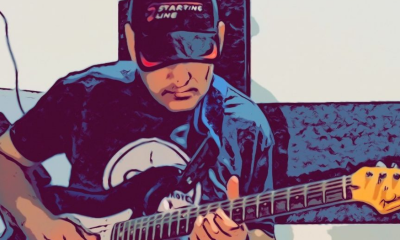
Omer B Channels Groove, Speed, and Collaborative Fire on the Exhilarating Funk Rock Instrumental “Bending Time”
-

 MUSIC2 months ago
Digital Guts Builds a Restless Genre Bending World From Anonymity, DIY Instinct, and Sonic Experimentation on “Digital Guts”
-

 MUSIC1 month ago
Nelia Ross Embraces Raw Pop Rock Vulnerability on “Unknown Man” as She Enters a New Chapter for GRAMMY Consideration
-

 MUSIC2 weeks ago
Li63rty Embraces Vulnerability and Warm Afro Pop Rhythms With Roxy on Her Romantic New Single “Without Your Love”
-

 MUSIC7 hours ago
SHANI G Finds a Tender Balance Between Heartbreak and Acceptance on Her Soulful New Trap R&B Single “Crossroads”


