
MUSIC
Fixed fate Drives With a Clear Passion on Their Latest Enjoyable Rock Album “Icarus”

Following the release of their brand new album “Icarus”, our team had the opportunity to share a short conversation with the band to find out more about their journey music. Here are a few excerpts from the interview:
We are happy to have you today. Tell us about your 2021 so far! What have you guys been up to?
Back playing live shows promoting the release of our latest album Icarus as of right now. Things have been good, the crowds are getting bigger and the songs are doing well. I’ve also been doing a lot of writing in preparation for a third and forth album along with a piano EP I’ve been wanting to put out for a couple years now. I’m always writing, so there’s a good chance if you ask me what’s next for the band I’ll be plugging some form of new music. A lot of the shows I play end up being testing grounds for new songs being written so you never really know what you’re going to get with a Fixed fate setlist.
Can you share more with our readers about your latest release “Icarus”? What inspired the album?
The theme of the record follows the Greek tragedy of the flight of Icarus. The lyrics on the record sing mostly about conflict in twos. So while the opening songs on the record follow conflict amongst two adversaries, the middle part speaks to conflict in love and then the closing songs cover conflict within oneself. The energy of the tracks also follows a flight pattern similar to the story so the album opens heavy to represent the beginning of the flight and continuously gets softer as Icarus swoops downwards towards the water. The album ends by progressively getting heavier again as Icarus flies up in a panic towards the sun until ultimately ending with the chaos of Pennies, the closing track. Most of my songs in some form are me singing about experiences I’ve been through so it was fun to use my personal style of writing and fuse it with a little bit of metaphor to something familiar in the culture. There’s a lot of that in the lyrics, going back and rereading them that’s one of the things I’m very proud of with these songs; the lyrics are deeply personal with a lot of little easter eggs in the words that point toward the aforementioned theme.

How did the band first get started?
When I started calling what I do a band. I’m half kidding. I am the primary creative force in the band as well as the primary instrumentalist so the music really is just an extension of me. Back in high school I had a drummer and rhythm guitarist in the band, but once we graduated we went separate ways as they didn’t want to be in the group anymore. Outside of having a rhythm section the band today is essentially the same as it was when we started and just goes wherever I bring my guitar and voice.
How did you all decide on the band name Fixed fate?
Well, it all started one day when I had an epiphany in the desert. I walked for three days in the Sahara with no food or water until I came upon an oasis. I was thrilled, saved even. I ran to the water to quench my insatiable thirst, but just as I leaned down, a coconut fell on my head and nearly killed me. Another three days passed before I awoke. When I finally came to, a camel named Chrysanthemum was licking my forehead and speaking in tongues. At first I was afraid, but something deep within me reassured me Chrysanthemum would do me no harm. The strangest part was I could understand everything she was saying. After a heated debate about the merits of 1 vs 2 hump camels finally subsided, she gave me directions back into town as well as supplied me with three bags of beef jerky and a concubine to escort me there. Wow. I thought. Fixed fate would be a great name for a band. And the rest is history.
How would you describe your sound to someone who just listened to your music for the first time?
Wide ranging. I usually just call it “Rock” for the fact that it’s all just guitar driven music. Sometimes that can be chords on an acoustic guitar with a soft melody over the top and other times it might be something fast and heavy on an electric guitar with a more aggressive approach to the vocals layered on. I just try to write stuff I like and that typically sounds like classic rock with a darker edge. There’s definitely an experimental side to our sound too. If you listen closely to the songs on Icarus you’ll find that there’s a ton of layered guitars and vocal harmonies across the music and in the background, I often included noises and sounds that I felt fit the music. The intro to The Tar Pit alone has a beer can opening, a plane flying over the studio, ankles cracking, a Theremin making demonic sounds…there’s just a lot going on in these songs, but every sound on this new record was intentional.
How has these past few months of quarantine affected you all creatively?
I’m always writing. The world around me doesn’t change that.
What advice do you have for anyone interested in starting their own band?
Be careful how you define success. If you don’t think about what goals you want to accomplish in your career you’ll spend your whole life chasing an invisible end without finding satisfaction in the progress you make along the way. Also, write for yourself. Don’t put a song out there you don’t like just because you think it might be a hit. Times change, taste fades and all that remains is good music.
Biggest lesson learned in your career so far?
Practice. Just because you’re good doesn’t mean you can just be on cruise control with the talent you’re trying to promote. Work at it everyday and be better than everyone else at it because that’s the reason people are coming to see you. They want to hear songs that were uniquely crafted and instrumentals that are played tight and well.
How do you get pumped up before a big event?
I usually try to steal at least one guys girlfriend right before the show starts to make sure there’s sufficient drama and adrenaline around getting up in front of the crowd and yelling into a microphone about broken hearts. Besides that it’s the usual party backstage; a nice reading circle and a spirited discussion on the merits of capitalism typically gives me just enough pep to go out there and deliver the goods.
Thank you for speaking with us! For our final question, is there anything else you would like to add?
Hi Mom! I guess I’d say you can find us on all major streaming platforms and keep an eye out for new music, it’s always in the works! Thanks for bringing me on I love talking about myself and acting like I have answers to things.
Catch up with Fixed fate on:





MUSIC
3B Rich Bring Confidence and Late Night Ambition Into Focus On the Sleek and Hypnotic New Single “Slow Twerking”
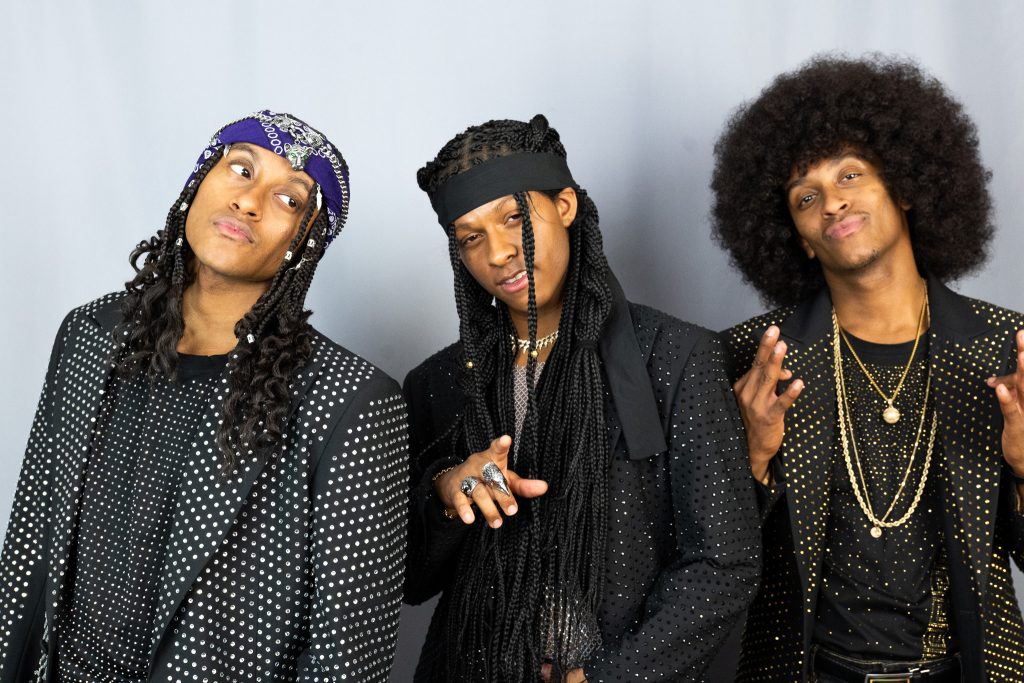
Afro Brazilian trio 3B Rich keep sharpening their place in contemporary music with the release of their latest single, “Slow Twerking.” Blending modern R&B, hip hop, and pop with an easy sense of control, the song lands as a hypnotic, club minded track full of cinematic detail and an undeniable groove.
Driven by smooth, pulsing production and airy synth work, “Slow Twerking” reaches beyond the usual dancefloor rush. There is a real story inside it. The track sketches the life of a dancer moving through the nightlife world, holding onto her confidence, resilience, and ambition. Through vivid lyrics, 3B Rich present a woman who commands attention while working toward something larger, supporting her child, investing in her education, and building a future for herself on her own terms.
A big part of the song’s appeal comes from the way the group handles its vocals. Brothers Hi-en, Mr. Spotlight, and J-Royal play off one another with the kind of chemistry that makes the track feel loose and precise at the same time. Verses, hooks, and melodies pass naturally between them. Each voice has its own character, but together they create a polished, unified sound. The hook stays with you, long after the song ends.
On the production side, “Slow Twerking” captures what makes 3B Rich stand out. They move between genres with care, never losing the emotional pull or rhythmic focus of the song. The layered arrangement, sharp sense of rhythm, and melodic immediacy make it easy to imagine the track thriving both on streaming platforms and in a live setting.
The single also arrives at an important point for the trio. As attention around “Slow Twerking” continues to build, 3B Rich are wrapping up work on their debut album. The project is expected to push further into the ideas introduced here, with more genre blending, stronger storytelling, and adventurous production choices. It speaks to the group’s drive to test their range while staying grounded in something genuine.
Originally from Los Angeles and now based in Las Vegas, 3B Rich bring a distinct West Coast feel that is shaped by broader global influences. Their music is marked by tight harmonies, a strong stage presence, and a creative vision that connects different sounds and cultural perspectives. As their catalog grows, so does the sense that they are becoming a genuinely forward looking act, one with the potential to leave a real mark on pop and urban music.
With more releases, live shows, and industry partnerships ahead, 3B Rich are moving steadily from rising talent to serious creative contender.
“Slow Twerking” is available now on all major streaming platforms.
For the latest music, video releases, and tour updates, follow 3B Rich on YouTube, Instagram, and TikTok.
MUSIC
In Sylk McCloud’s Safeword, Bedroom R&B Meets Club Heat as Mr.24 Adds Grit to Bubu’s Midnight Pulse

Rising bedroom R&B crooner Sylk McCloud, hailing from SE Washington, DC, turns up the temperature on his latest single, “Safeword.” It’s a slow burner built for the club, where glossy modern R&B melts into a little hip hop swagger. BuBu The Producer keeps the track sleek and plush, while featured rapper and emcee Mr.24 slides in with a verse that sharpens the edge.
Right away, “Safeword” lands in that moody late night pocket. The instrumental is velvet smooth, but it moves with a steady, hypnotic groove that nudges you closer. Sylk sings like he’s speaking directly across a dark room, soft in tone yet sure of himself. That push and pull is the point, a mix of vulnerability and control, desire and hesitation, all held in tension without spilling into melodrama.
The song takes its cues from the “Shades of Grey” film series, leaning into trust, fantasy, and the charged negotiation that comes with intimacy. Sylk makes the hook the centerpiece, letting the melody do the seducing even as the lyrics get bold:
“Tell me you’re sexy, all positions go
Are you ready for submission
Fifty shades is what I’m giving
Satisfaction all positions
Only one thing missing
Tell me your safeword…”
Those lines set the mood with a teasing confidence that never feels rushed. The chorus is restrained and tempting, built to linger rather than hit and disappear. Sylk’s voice floats above the beat with a magnetic ease, so the hook sticks in your head and in your gut.
When Mr.24 arrives, the energy shifts without breaking the spell. His delivery brings a gritty smooth contrast to Sylk’s melodic glide, grounding the fantasy in something a little tougher. It’s a smart pairing. The two artists sound comfortable sharing the same space, which helps “Safeword” work in more than one setting, from a packed dance floor to a late night playlist you keep to yourself.
A lot of the track’s pull comes from the production choices. BuBu The Producer builds a lush, atmospheric soundscape that matches Sylk’s tone, leaving room for breath, for pause, for that moment before the next touch. It feels designed for slow dancing, for cruising through the city after midnight, or for setting the room’s temperature with intention.
With “Safeword,” Sylk McCloud keeps carving out his lane in contemporary R&B, blending emotional weight with sensual confidence. The single plays like a small, cinematic scene, intimate on purpose, polished without feeling distant.
“Safeword” is now available on all major streaming platforms.

Screenshot
Some artists slide into a scene and hope the room makes space. Killem KD walks in like the room is already hers. Listen.
On her one take freestyle “Trouble Man (One Take),” the Mound Bayou, Mississippi native makes a clean announcement. She is here, she is ready, and she is finished waiting on permission. In about 1 minute and 25 seconds, KD delivers something that feels closer to a notice than a warm introduction, a warning shot aimed at anyone treating her like background noise.
Her intent is obvious in the way she hits each line. When she raps, “said I’m tired of waiting in corners and closets, it’s my time to shine, I can’t be quiet,” it lands like autobiography, not bravado. This is presence music, the kind that changes the temperature of a track. KD performs like she can feel eyes on her, like the tally is being kept, like silence has stopped being an option. Doubt, gatekeepers, anyone trying to flatten her momentum, they all get drowned out by the force in her voice.
The flow is slick and surgical, rooted in the South and proud of it. Every bar locks into the beat with a cadence that sounds fused, not rehearsed. You hear finesse, then grit right behind it, swagger sharpened by hunger. She stays patient. She doesn’t chase the pocket. She lives in it. The whole thing reads like instinct, not homework.
The video sharpens that feeling. Filmed guerrilla-style outside an old hospital building, it strips the moment to essentials: Killem KD, a mic, and whatever the day gives her. No crew lights. No studio polish. No safety net. Just daylight, concrete, and conviction. A dangling silver microphone adds a throwback touch, nodding to a time when you could measure an MC by breath control and bars.
That location matters, too. Hospitals are where people show up broken, hurting, trying to make it through. KD stands just outside that threshold and spits like she’s the diagnosis, unavoidable, contagious, impossible to dismiss. She closes her eyes at points, letting the performance swing between confession and confrontation. The result feels street-level and cinematic at once, early freestyle energy filtered through quiet urban melancholy.
“Trouble Man (One Take)” doesn’t lean on spectacle. It leans on certainty. KD knows what she brings, and she moves like her moment isn’t on the way. It’s here. This puts her in the lane of artists who demand recognition because the work leaves no other option.
Born and raised in the Delta, Killem KD carries southern soul, raw storytelling, and fearless energy into every bar. She’s pushing to put Mississippi on the map, and a clip like this makes that goal feel less like ambition and more like trajectory.
No edits.
No excuses.
No permission needed.
This is Killem KD, trouble in the best way possible.
Connect with Angelee:
| Website | TikTok | Facebook | Instagram | X |
-
 MUSIC2 months ago
Killem KD Brings Delta Grit to a One Take Freestyle That Sounds Like a Warning and a Promise
-

 MUSIC3 months ago
Angele Lapp Brings Quiet Conviction to Hale’s “Kung Wala Ka”, Turning a Beloved Breakup Song Into Something Personaltitl
-

 MUSIC2 months ago
In Sylk McCloud’s Safeword, Bedroom R&B Meets Club Heat as Mr.24 Adds Grit to Bubu’s Midnight Pulse
-
 MUSIC2 weeks ago
3B Rich Bring Confidence and Late Night Ambition Into Focus On the Sleek and Hypnotic New Single “Slow Twerking”


