
MUSIC
Comparing Melokid vs DistroKid: (An Unbiased Evaluation)

In this article, I’ll provide a fair comparison between Distrokid vs Melokid, two important players in the music distribution platform arena. Drawing from my personal experience of releasing music on both Melokid and DistroKid, I’ll offer insights into each platform. Additionally, I’ll incorporate findings from online research to provide a comprehensive overview.
To ensure a structured and cohesive review, I propose dividing the assessment into five distinct categories. We will analyze and compare Melokid and DistroKid across the following dimensions: Customer Service, cost and distribution.
What does music distribution entail?
Let’s swiftly ensure everyone is on the same page regarding the concept.
A music distribution service is a company that takes your finalized song and shares it across various global streaming platforms. Typically, these services include uploading your song to popular platforms such as Spotify, Apple Music, YouTube Music, Amazon, Tidal, Deezer, TikTok, Instagram, and other major music streaming services.

Can you directly upload your song to platforms like YouTube and SoundCloud? Well, for many other significant music streaming services such as Spotify and Apple Music, it’s not that straightforward. You have to go through an intermediary, which is where a music distributor becomes essential.
Utilizing a music distributor involves a cost, typically in the form of an annual fee, and this holds true for both DistroKid and Melokid. However, certain other distributors, like CD Baby, operate on a one-time fee model.
Moreover, certain music distributors provide free distribution services but, in exchange, take a percentage of your music royalties. For instance, CD Baby deducts a 9% share from royalties, and newcomers to the music distribution scene, such as Ditto and TuneCore, also follow a model of free distribution coupled with a percentage deduction from music royalties.
In contrast, both Melokid and DistroKid require an annual fee but, in return, ensure artists receive 100% of their music royalties – a topic we’ll delve into later.
Beyond facilitating the upload of your music to various streaming platforms, music distributors offer an array of features to assist with your music marketing efforts. Examples include Spotify pre-save landing pages, music admin publishing, YouTube content ID tracking, artwork design generators, and video generators.
With a shared understanding of what a music distributor entails, let’s now thoroughly examine and compare Melokid and DistroKid. The pivotal questions to address are: which one is superior? Is Melokid a worthwhile choice? Is DistroKid a valuable option? Let’s explore and uncover the answers.
- Customer service
Now, let’s delve into our final comparison aspect between TuneCore and DistroKid, focusing extensively on customer service. This aspect held significant weight for me, particularly in the early stages of selecting a music distributor. As an emerging indie artist, a plethora of questions arises. Examples include: How to claim a Spotify artist page? I already have an ISRC code; what do I do? What’s the process for switching music distributors?
Numerous other questions emerge along the way, and obtaining prompt and accurate answers is crucial. As a more seasoned professional in releasing music, customer service holds a diminished priority for me now that I’ve gained experience in the industry.
Customer Support at Melokid
Melokid seamlessly integrates customer service into its pricing structure. If you opt for the Unlimited plan priced at $19.99 per year, you can be confident in receiving a customer service response within 24 hours. This assurance is particularly valuable when you require assistance. Even with the Record deal plan, you can enjoy an impressive customer service response time of just 1 business day. That level of responsiveness is truly remarkable !
I have interacted with the Melokid customer service team on a few occasions, and I’ve consistently been impressed with their prompt responses. When I released my song and required the Spotify URI code for a Spotify pre-save landing page—an aspect I was unfamiliar with—I reached out, and their swift response provided me with the necessary information.
Customer Support at DistroKid
Unlike Melokid, DistroKid doesn’t incorporate customer service directly into its pricing plans, which may be less reassuring for new artists unsure about their access to assistance when needed.
Nevertheless, DistroKid does maintain a customer service center, and you can submit requests through their designated channel. It’s worth noting that response times can vary, typically ranging from 3 to 7 business days. The complexity of your request may also play a role, with simpler queries likely receiving faster responses.
Melokid emerges as the victor in this aspect due to the inclusion of guaranteed response times in their pricing plan for customer service. While DistroKid maintains an amiable support team, the uncertainty regarding when you might receive a response leaves users in the dark.
2. Cost
When evaluating the costs associated with both of these distributors, there are numerous factors to take into account. Each platform imposes an annual fee for uploading your music, accompanied by distinct features within their plans.
Consider which features are most relevant to you. For independent artists assessing costs, features such as a Scheduled Release Date, Customizable Label Name, and Customer Support hold particular importance. It is crucial to comprehend the features necessary for your musical career success before settling on a music distributor. This understanding will guide you in determining which distributor aligns best with your needs.
The aforementioned three features carry significance for me due to the following reasons:
- Release Date: Having the ability to select a future release date is essential for planning Facebook or Instagram marketing campaigns around my releases. This ensures that I can inform my audience about the upcoming release in advance.
- Label Name: The option to choose my own label name holds importance. For instance, I prefer not to see Melokid or DistroKid displayed on Spotify when viewing the song credits.
- Customer Support: Timely responses to my queries are crucial to prevent any sense of being left in the dark, especially for new artists navigating the music industry.
Now armed with a clearer understanding of the pivotal features, let’s proceed to compare the costs of Melokid and DistroKid.

What is the cost of DistroKid?
DistroKid offers three pricing plans, each catering to different needs. Let’s examine each plan with a focus on the features that matter to us. Unfortunately, I cannot provide a direct link to the DistroKid pricing plan; you need to sign up to DistroKid to access it, which can be a bit inconvenient. Here’s a breakdown of the plans:
Musician Plan – $22.99 USD/year : this is the entry-level plan, priced at $22.99 USD per year, offering unlimited releases at an affordable rate. However, it may not be suitable for me as it lacks the specific features I require. If the features align with your needs, this plan could be an ideal choice, emphasizing the importance of considering features beforehand.
Musician Plus Plan – $35.99 USD/year: priced at $35.99 USD per year, this second-tier plan includes everything in the Musician Plan and more. Upon reviewing the features, it covers everything crucial to me, except for customer service, which isn’t explicitly mentioned.
Label Plan – $79.99 USD/year: as the most expensive plan at $79.99 USD per year, the Label Plan appears tailored for independent labels. However, as an indie musician, the extensive features catering to 5-100 artists are more than I need. I’ll be passing on this one. Customer service details are still absent, but we’ll delve into that further in the customer service section.
What is the cost of Melokid?
Here are the pricing details for the available plans:
Unlimited Plan – $19.99 USD/year: priced at $19.99 USD per year, the Unlimited Plan encompasses all the features crucial to me. Notably, it includes splits, customer support and the ability to customize the label name. The label name is the designation visible in the song credits, ensuring a personalized touch. For instance, on Spotify, without a custom label name, it would display Melokid or DistroKid instead.
RECORD DEAL Plan – $49.99 USD/year: Melokid’s top-tier plan is the RECORD DEAL Plan, costing $49.99 USD per year. Loaded with every feature one might desire, this plan is comprehensive in meeting my specific needs. It goes beyond by offering advances, splits, a customer service response time of 1 business day with video call assistance, and opportunities for record deals—an exceptionally valuable package.
By examining the pricing pages, it’s evident that Melokid is the more affordable choice. Their initial pricing tier begins at $19.99. In comparison, DistroKid’s first-tier pricing plan is $22.99. Consequently, Melokid emerges as the more cost-effective option.

III. Music Distribution
Which platform, Melokid or DistroKid, excels in distributing your music? Let’s explore the distribution landscape for each and see how they compare. If your goal is to upload your song to major streaming services such as Spotify, Apple Music, YouTube Music, Amazon Music, TikTok, Instagram, Tidal, Deezer, and Pandora, rest assured that both DistroKid and Melokid will facilitate the upload to all these platforms seamlessly.
For those seeking distribution to more niche platforms, a bit of investigation is required to ascertain if either platform caters to your specific streaming service preferences. For instance, Deezer is a French music streaming service. Upon investigation, it becomes evident that both DistroKid and Melokid will upload your music to Deezer.
Melokid provides a list of the streaming services they upload to, while information about DistroKid’s supported platforms wasn’t readily available in my search.
In all likelihood, both Melokid and DistroKid are likely to be on par in terms of distribution capabilities, given that they both cover all major platforms.

MUSIC
3B Rich Bring Confidence and Late Night Ambition Into Focus On the Sleek and Hypnotic New Single “Slow Twerking”
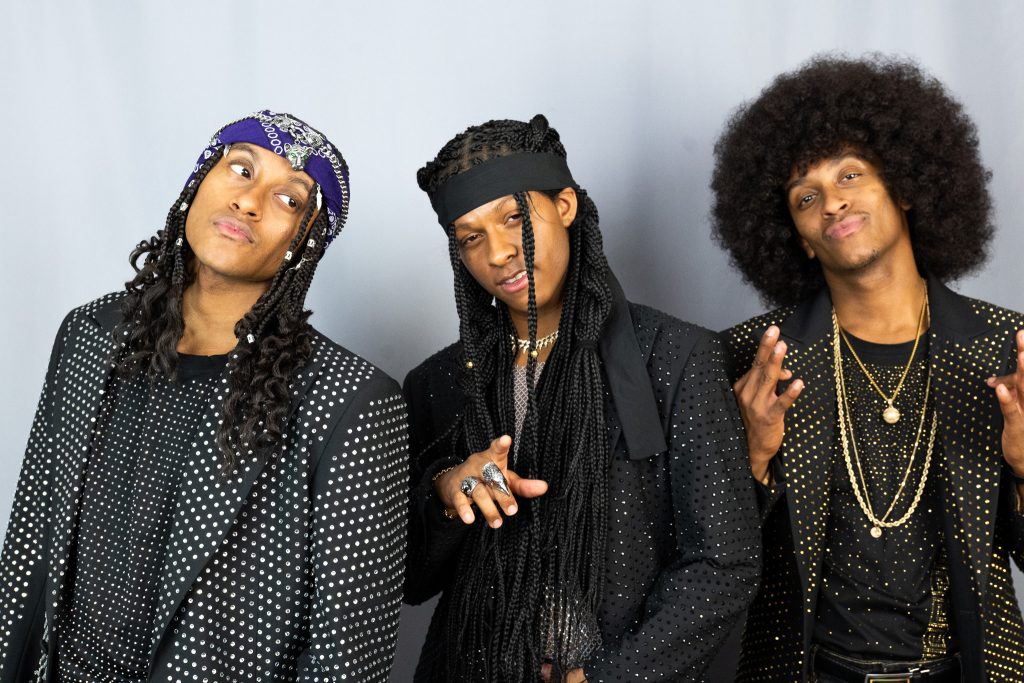
Afro Brazilian trio 3B Rich keep sharpening their place in contemporary music with the release of their latest single, “Slow Twerking.” Blending modern R&B, hip hop, and pop with an easy sense of control, the song lands as a hypnotic, club minded track full of cinematic detail and an undeniable groove.
Driven by smooth, pulsing production and airy synth work, “Slow Twerking” reaches beyond the usual dancefloor rush. There is a real story inside it. The track sketches the life of a dancer moving through the nightlife world, holding onto her confidence, resilience, and ambition. Through vivid lyrics, 3B Rich present a woman who commands attention while working toward something larger, supporting her child, investing in her education, and building a future for herself on her own terms.
A big part of the song’s appeal comes from the way the group handles its vocals. Brothers Hi-en, Mr. Spotlight, and J-Royal play off one another with the kind of chemistry that makes the track feel loose and precise at the same time. Verses, hooks, and melodies pass naturally between them. Each voice has its own character, but together they create a polished, unified sound. The hook stays with you, long after the song ends.
On the production side, “Slow Twerking” captures what makes 3B Rich stand out. They move between genres with care, never losing the emotional pull or rhythmic focus of the song. The layered arrangement, sharp sense of rhythm, and melodic immediacy make it easy to imagine the track thriving both on streaming platforms and in a live setting.
The single also arrives at an important point for the trio. As attention around “Slow Twerking” continues to build, 3B Rich are wrapping up work on their debut album. The project is expected to push further into the ideas introduced here, with more genre blending, stronger storytelling, and adventurous production choices. It speaks to the group’s drive to test their range while staying grounded in something genuine.
Originally from Los Angeles and now based in Las Vegas, 3B Rich bring a distinct West Coast feel that is shaped by broader global influences. Their music is marked by tight harmonies, a strong stage presence, and a creative vision that connects different sounds and cultural perspectives. As their catalog grows, so does the sense that they are becoming a genuinely forward looking act, one with the potential to leave a real mark on pop and urban music.
With more releases, live shows, and industry partnerships ahead, 3B Rich are moving steadily from rising talent to serious creative contender.
“Slow Twerking” is available now on all major streaming platforms.
For the latest music, video releases, and tour updates, follow 3B Rich on YouTube, Instagram, and TikTok.
MUSIC
In Sylk McCloud’s Safeword, Bedroom R&B Meets Club Heat as Mr.24 Adds Grit to Bubu’s Midnight Pulse

Rising bedroom R&B crooner Sylk McCloud, hailing from SE Washington, DC, turns up the temperature on his latest single, “Safeword.” It’s a slow burner built for the club, where glossy modern R&B melts into a little hip hop swagger. BuBu The Producer keeps the track sleek and plush, while featured rapper and emcee Mr.24 slides in with a verse that sharpens the edge.
Right away, “Safeword” lands in that moody late night pocket. The instrumental is velvet smooth, but it moves with a steady, hypnotic groove that nudges you closer. Sylk sings like he’s speaking directly across a dark room, soft in tone yet sure of himself. That push and pull is the point, a mix of vulnerability and control, desire and hesitation, all held in tension without spilling into melodrama.
The song takes its cues from the “Shades of Grey” film series, leaning into trust, fantasy, and the charged negotiation that comes with intimacy. Sylk makes the hook the centerpiece, letting the melody do the seducing even as the lyrics get bold:
“Tell me you’re sexy, all positions go
Are you ready for submission
Fifty shades is what I’m giving
Satisfaction all positions
Only one thing missing
Tell me your safeword…”
Those lines set the mood with a teasing confidence that never feels rushed. The chorus is restrained and tempting, built to linger rather than hit and disappear. Sylk’s voice floats above the beat with a magnetic ease, so the hook sticks in your head and in your gut.
When Mr.24 arrives, the energy shifts without breaking the spell. His delivery brings a gritty smooth contrast to Sylk’s melodic glide, grounding the fantasy in something a little tougher. It’s a smart pairing. The two artists sound comfortable sharing the same space, which helps “Safeword” work in more than one setting, from a packed dance floor to a late night playlist you keep to yourself.
A lot of the track’s pull comes from the production choices. BuBu The Producer builds a lush, atmospheric soundscape that matches Sylk’s tone, leaving room for breath, for pause, for that moment before the next touch. It feels designed for slow dancing, for cruising through the city after midnight, or for setting the room’s temperature with intention.
With “Safeword,” Sylk McCloud keeps carving out his lane in contemporary R&B, blending emotional weight with sensual confidence. The single plays like a small, cinematic scene, intimate on purpose, polished without feeling distant.
“Safeword” is now available on all major streaming platforms.

Screenshot
Some artists slide into a scene and hope the room makes space. Killem KD walks in like the room is already hers. Listen.
On her one take freestyle “Trouble Man (One Take),” the Mound Bayou, Mississippi native makes a clean announcement. She is here, she is ready, and she is finished waiting on permission. In about 1 minute and 25 seconds, KD delivers something that feels closer to a notice than a warm introduction, a warning shot aimed at anyone treating her like background noise.
Her intent is obvious in the way she hits each line. When she raps, “said I’m tired of waiting in corners and closets, it’s my time to shine, I can’t be quiet,” it lands like autobiography, not bravado. This is presence music, the kind that changes the temperature of a track. KD performs like she can feel eyes on her, like the tally is being kept, like silence has stopped being an option. Doubt, gatekeepers, anyone trying to flatten her momentum, they all get drowned out by the force in her voice.
The flow is slick and surgical, rooted in the South and proud of it. Every bar locks into the beat with a cadence that sounds fused, not rehearsed. You hear finesse, then grit right behind it, swagger sharpened by hunger. She stays patient. She doesn’t chase the pocket. She lives in it. The whole thing reads like instinct, not homework.
The video sharpens that feeling. Filmed guerrilla-style outside an old hospital building, it strips the moment to essentials: Killem KD, a mic, and whatever the day gives her. No crew lights. No studio polish. No safety net. Just daylight, concrete, and conviction. A dangling silver microphone adds a throwback touch, nodding to a time when you could measure an MC by breath control and bars.
That location matters, too. Hospitals are where people show up broken, hurting, trying to make it through. KD stands just outside that threshold and spits like she’s the diagnosis, unavoidable, contagious, impossible to dismiss. She closes her eyes at points, letting the performance swing between confession and confrontation. The result feels street-level and cinematic at once, early freestyle energy filtered through quiet urban melancholy.
“Trouble Man (One Take)” doesn’t lean on spectacle. It leans on certainty. KD knows what she brings, and she moves like her moment isn’t on the way. It’s here. This puts her in the lane of artists who demand recognition because the work leaves no other option.
Born and raised in the Delta, Killem KD carries southern soul, raw storytelling, and fearless energy into every bar. She’s pushing to put Mississippi on the map, and a clip like this makes that goal feel less like ambition and more like trajectory.
No edits.
No excuses.
No permission needed.
This is Killem KD, trouble in the best way possible.
Connect with Angelee:
| Website | TikTok | Facebook | Instagram | X |
-

 MUSIC3 months ago
King Jay Da Blountman Turns Versatile Into A Day Off Fantasy With The Easygoing Pull Of “Fish’n”
-

 MUSIC3 months ago
Omaye keeps it brief and hits hard on “Tell Them”, a focused Afrobeats and Amapiano promise of what is coming
-

 MUSIC2 months ago
Killem KD Brings Delta Grit to a One Take Freestyle That Sounds Like a Warning and a Promise
-

 MUSIC2 months ago
Angele Lapp Brings Quiet Conviction to Hale’s “Kung Wala Ka”, Turning a Beloved Breakup Song Into Something Personaltitl
-

 MUSIC2 months ago
In Sylk McCloud’s Safeword, Bedroom R&B Meets Club Heat as Mr.24 Adds Grit to Bubu’s Midnight Pulse
-

 MUSIC4 days ago
3B Rich Bring Confidence and Late Night Ambition Into Focus On the Sleek and Hypnotic New Single “Slow Twerking”


