
MUSIC
FreshTasteGroup and Swats Nation Present “Bolegs: An Old ATLANTA Story,” Screening at the Sundance Film Festival 2024


Jeffery Dean Morgan” and #FreshTasteGroup Director “Tahir StayFresh Ali” Entering into the Macro Lounge event at SunDance film festival, 2024.
A cinematic odyssey that will see Atlanta’s rich cultural history unfold like the chapters of a well-crafted novel, the eagerly anticipated “Bolegs: An Old ATLANTA Story” promises a journey like no other. This collaborative effort brings together Atlanta’s finest in entertainment and film production to showcase to the world what Atlanta has been and continues to be.
Audiences can expect a captivating film that takes them to the heart of Atlanta, showcasing its vibrant landscapes, beautiful people, great music, and the icons who shaped its rich cultural and musical heritage.
The film is an ode to every unsung hero who has contributed to what Atlanta is renowned for. Viewers can anticipate an enthralling and nostalgic expedition that will give every contributor their flowers as well as honor those who left long ago, but whose impacts still loom large and are still being felt today.
More than just a breathtaking film, this is also an opportunity to recognize the expanding entertainment scene and film industry in Atlanta, the opportunities this presents, and how this has impacted the community as well.
Everyone involved in the project, including the CEO of Swats Nation, is immensely excited for a film that aims to achieve global influence. It took a lot of time and effort for this to be a success, and both FreshTasteGroup and Swats Nation cannot wait to share this with the world and, more importantly, the people of Atlanta, whose story is being told in extensive dimensions.
“Bolegs: An Old ATLANTA Story” tells the stories of iconic artists, virtuosic producers, excellent politicians, and other achievers in so many capacities who have left an indelible mark on the city’s ethnic fabric and civilization.
This film is a celebration of pride—a narrative highlighting a community’s achievements and contributions, offering a glimpse into the foundational elements that have shaped today’s Atlanta.
This is legacy; this is history in the making; this is “Bolegs: An Old ATLANTA Story.” Let’s meet at the Film Screening at Sundance Film Festival 2024 and let the story begin!
For more information, check both FreshTasteGroup and Swats Nation’s websites, www.freshtastegroup.com and www.swatsnation.com.
Media Contact:
Melissa Lewis
General Manager, FreshTasteGroup
Tel: 404-337-4298
Email: [email protected]

MUSIC
Gospel Artist Harmoni Allen Confronts Mental Health Stigma With Vulnerability Faith and Soul on Her Powerful Single “Schitzo”

Right now, gospel artist Harmoni Allen’s work reflects the transformative power of faith, with vulnerability, triumph, encouragement, and Christ-centered hope running through her music. Her warm vocals, expressive delivery, and deeply personal storytelling give that message a human center. Drawing from lived experience and testimony, she turns questions of faith, healing, freedom, resilience, and hope into songs that feel intimate without losing their uplifting spirit.
Harmoni Allen’s “Schitzo” is a sincere, soul-stirring track built around a deeply personal subject. Short for schizophrenia, the song opens an intimate conversation about mental well-being, judgment, fear, vulnerability, and the struggle to feel free in a world that can be quick to define people from the outside. Harmoni does not keep the subject at a safe distance. She brings the listener directly into the experience, shaping the song as a confession that feels immediate and exposed.
The accompanying music video establishes that vulnerability from its opening moments. Harmoni sits alone on her front porch, drinking water, visibly troubled and seemingly asking herself whether she is truly okay. Nearby, two women watch her from a distance. Their expressions communicate the judgment and assumptions that sit at the center of the song. Without speaking, they capture a painful reality: people can decide who someone is before taking the time to understand what that person may be going through.
Looking for answers, Harmoni calls a friend and heads to a hospital. The song then unfolds inside a psychiatrist’s office, where she is asked, “So, Miss Allen, what brings you to my office today?” Her answer becomes the emotional core of “Schitzo.” The music takes over, developing into a slow-burning, soulfully rich R&B confession carried by Harmoni’s heavenly, deeply vulnerable vocals.
Verse by verse, Harmoni reveals the strain of living under the gaze of people who may fear, misunderstand, or judge what they cannot see. She sings about people being scared of her, watching from afar, the medicines she takes, and the exhausting burden of being viewed through a label instead of recognized as a human being. Inside that pressure, however, comes a moment of release. She looks into the mirror, sits on the bed, takes a breath, and arrives at the realization that she is free.
That realization does not magically change the world around her. People still look at her the same way. Their assumptions remain. This is where “Schitzo” broadens into something many listeners can recognize, the understanding that other people’s perceptions do not get to define your identity, your worth, or your destiny.
Harmoni’s faith gives that idea its foundation. Beneath the emotional turbulence is a steady conviction that God has the last say. People may judge from afar, attach labels, and make assumptions based on appearance, yet those opinions do not determine the course of someone’s life. For Harmoni, faith creates a space where judgment begins to lose its hold and freedom becomes possible.
Musically, “Schitzo” carries the same emotional weight as its subject. The production settles into a slow-burning R&B groove that gives Harmoni’s voice room to breathe, ache, and communicate. Her soulful delivery has a nostalgic warmth, while smooth layers of vocal harmony wrap around the lead with an almost heavenly glow. The arrangement remains restrained, keeping the storytelling in clear focus instead of crowding it with unnecessary drama. Harmoni shifts naturally between fragility and quiet strength, making the performance feel close enough to resemble a private conversation across the room.
“Schitzo” ultimately centers on being seen, being misunderstood, finding your breath again, and recognizing that freedom can survive other people’s judgment.
When the final note fades, Harmoni Allen leaves behind the message that has guided the song from the beginning: people may have their opinions, but God has the final say!
Connect with Harmoni
MUSIC
Serag Baddar Revisits a Teenage Guitar Idea With Intimacy and Patience on the Atmospheric Post Rock Track “Limerence”

Based in Malta, composer Serag Baddar turns a long-held guitar idea into something intimate and absorbing on “Limerence.” The post-rock track grew from a riff he wrote 15 years ago, with one section carrying a subtle nod to Buckethead’s “Padmasana,” whose rhythm guitar left a clear impression on Baddar.
Crisp, mellow, and atmospheric, “Limerence” moves through clean guitar layers and an ethereal sense of space. Silken vocals shimmer underneath, adding a restrained melancholy that suggests heartbreak without overwhelming the arrangement.
Baddar’s background in heavy metal remains important to the song, even as he strips away high-gain distortion and conventional vocal delivery. In their place, structure and melody do most of the emotional work. At the center is a clean, melodic guitar riff designed to flow ergonomically across the fretboard, giving the performance a natural physical ease.
The quieter acoustic and clean passages of progressive metal are an obvious reference point. Opeth and Tool, two bands that have shaped Baddar’s style, can be heard in the track’s sense of structure and restraint. Its spacious ambient textures also draw from the accessible melodic soundscapes associated with instrumental artists such as Buckethead. “Padmasana” is especially relevant, with its rhythm guitar inspiring a small section of “Limerence.”
The pacing is deliberate and unhurried, in keeping with post-rock’s slow-burn character. Its rhythmic framework stays steady, patient, and evocative, giving the central guitar melody room to breathe. Notes are allowed to ring out and decay naturally rather than being crowded by unnecessary movement.
Much of the song’s appeal comes from that simplicity. The arrangement avoids excessive time-signature gymnastics and settles into a smooth, approachable cadence that strengthens its hypnotic quality. That choice suits the meaning behind “Limerence,” the intense and involuntary psychological state of romantic obsession and infatuation that Baddar seeks to capture emotionally.
Because the released track is a “demo” mix, it retains a raw, unpolished authenticity. That texture fits Baddar’s philosophy of “writing for dopamine,” prioritizing emotional resonance and the organic “magic” of a creative spark over pristine, heavily compressed commercial engineering.
The result is intimate and thoughtful. It feels reflective and deeply personal, like a bedroom guitarist finally translating a 15-year-old teenage memory into a cohesive, immersive piece of music. The closing stretch brings the song’s crisp, clean, haunting guitar riff into sharper focus, giving the track a fitting climax and reminding us how much of its emotional weight rests on that original idea.
Baddar waited until he felt his technical ability and musical vision had matured enough to do the riff justice before recording and releasing it. He approaches music as a philosophical hobby, creating for the pleasure of the craft rather than under commercial pressure.
Taken as a whole, “Limerence” is an accomplished, carefully felt performance worth spending time with. It is streaming now.
Follow Serag Baddar: Instagram
MUSIC
Omer B Channels Groove, Speed, and Collaborative Fire on the Exhilarating Funk Rock Instrumental “Bending Time”
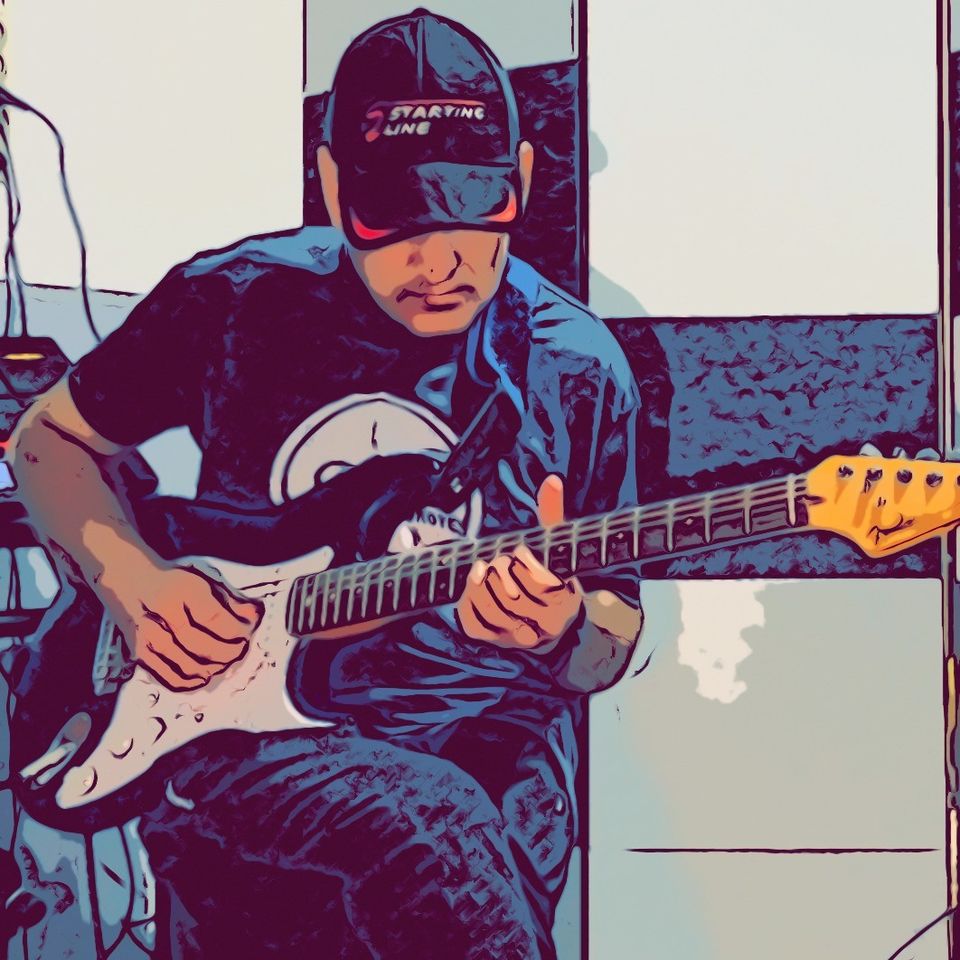

Omer B has built a significant part of his artistic identity around collaboration, working with musicians from across the world. On “Bending Time,” he leans fully into that instinct. The track brings together guitar virtuoso Oz Noy, drummer Oded Kafri, bassist Andy Warner, and Abramo Riti on Hammond organ, giving Omer B a formidable cast for what he does best: composing exceptionally good music.
“Bending Time” is a high energy, five minute instrumental funk rock piece that establishes its character almost immediately. Omer B’s guitar locks in with Kafri’s forceful drumming from the opening stretch, creating an intro that feels urgent, muscular, and inviting. Once the Hammond and bass enter the picture, the arrangement opens up into something richer and more expansive.
That introduction builds tension quickly while setting a steady sense of anticipation. You can hear the rhythm gathering momentum as the groove takes hold. At its core is a relentless, head bobbing funk rock backbeat. The pace is fast, yet the players remain firmly in the pocket, giving the song a driving foundation that keeps it moving at full speed without sacrificing its groove.
As composer, Omer B acts as the track’s anchor. He resists overcrowding the arrangement with constant shredding, choosing instead to work through sharp, syncopated rhythm chops and clearly defined melodic motifs. His guitar helps shape the song’s architecture, from its central themes to the heavy, overdriven chord progressions that guide each transition.
Oz Noy’s entrance raises the temperature. He slips naturally into the established groove, echoing the track’s hauntingly familiar melodic cadence while bringing in a streak of “twisted blues” character. His solos are explosive without feeling detached from the arrangement, and they push the song into a higher gear.
The interplay becomes especially satisfying when Noy’s lead lines careen over Omer B’s heavy rock foundation. Kafri’s airtight drumming, Warner’s bass, and Riti’s Hammond keep the music grounded while the guitars add a fiery improvisational edge. That tension gives “Bending Time” a sense of motion that suits its title.
Unpredictable, futuristic, and haunting, “Bending Time” plays like an exhilarating experiment that draws strong performances from everyone involved. Omer B’s experience as an amateur race driver also seems to surface in the track’s polished, high octane momentum. There is a clear feeling of speed, control, and mechanical precision running through the performance.
By the end, the vintage rock swagger and modern fusion sophistication feel naturally connected. In my professional opinion, they should “frame the arrangement!”
Connect with Omer B
Official Website
Instagram
Facebook
YouTube
Spotify
Apple Music
-

 MUSIC2 months ago
Michael M Jeni Turns Heartbreak Into Self Respect And Quiet Release On New R&B Single “Played”
-

 MUSIC2 months ago
DJ PAPPY’s “Offside Trap” Turns Three Lions Belief Into A Chant Ready World Cup Rallying Cry For England
-
 MUSIC1 week ago
Serag Baddar Revisits a Teenage Guitar Idea With Intimacy and Patience on the Atmospheric Post Rock Track “Limerence”
-
 MUSIC1 week ago
Omer B Channels Groove, Speed, and Collaborative Fire on the Exhilarating Funk Rock Instrumental “Bending Time”
-

 MUSIC3 days ago
Gospel Artist Harmoni Allen Confronts Mental Health Stigma With Vulnerability Faith and Soul on Her Powerful Single “Schitzo”


