
MUSIC
Multitalented Singer, Drummer, and Songwriter Clay Joule Welcomes a Listener to the “Realm” of His Kingdom!


By any and all standards, I would describe Clay Joule’s musicality as genre-defying; this multi-faceted artist exudes bodies of work that embody real artisanship. As a multi-gifted drummer, singer-songwriter, Clay possesses a good ear for sound design, and from his impressive discography, a listener gets to experience the true depth of his art and craft. As someone who is also alive to societal needs, his music is as impactful as it is entertaining, carrying meaningful and sensitive issues at its core so as to spread more awareness and shine light on some of the topics the world tries to ignore.
Focused exclusively on writing and recording new, authentic music that crosses all genres, Joule has in the process been able to assemble one of the largest and most grand singer-songwriter catalogues in the industry. Borrowing from a lifetime of musical influences, it is no surprise that his songs are hard to place, often flying between (and combining) pop beats, crunchy drums, and traditional folk sounds and natural sounds.
Clay Joule’s goal is to wake up every day and make music, and one day, through that engaging process, write and perform what will later be seen as the greatest song in history; an inexplicably great song that will define humankind for centuries. Owing to his hard work and consistency, this is indeed not a far-fetched dream!
His latest masterpiece “Realm” delves deep into what has become a worldwide revolution; – borrowing from the the bravery of Chinese people’s White Paper Revolution as the vivid example of how people around the world are dealing with tough Covid policy. The humble A4 sized sheets of paper symbolizing the lack of Constitutional Right on freedom of speech, movement and mobility, Joule gives an enchanting and equally emotional performance.
Clay praises the bravery of people and incredible leadership that both turned a huge health sensitive policy overnight. The most unprecedented of all.
The cadence of this tune features dominantly peppered and striking drums in a blissful marriage with the keyboard and other percussion that adds to the sonic variety and warmth of this particular masterpiece. I love how, as the track gains pace, there is an integration of the horn sections to add that crystal clear polish and help heighten the impact of the theme of the track tenfold.
When I think about this performance, I feel that it is more like the culmination of that innate drive and raw talent with a poetry-packed lyricism to deliver such a universally appealing masterpiece as this so graciously.
I know for a fact or two that records like “Realm” will serve to elevate Clay Joule to international acclaim!
“Realm” is 5:25 minutes of poetry that no new artist can even dream of reaching…tell you what, talent at this level is few and far between, and that is why we have to appreciate artists like Clay Joule, who go out of their way to stamp indelible and timeless standards in their music.
I have a feeling you are going to appreciate this impressive body of work, and it would really count for something were you to share this track with as many people as possible. Through that, you will indeed be spreading the ‘white paper movement’ message everywhere and helping the cause gain its wings and spread even further!

MUSIC
Serag Baddar Revisits a Teenage Guitar Idea With Intimacy and Patience on the Atmospheric Post Rock Track “Limerence”

Based in Malta, composer Serag Baddar turns a long-held guitar idea into something intimate and absorbing on “Limerence.” The post-rock track grew from a riff he wrote 15 years ago, with one section carrying a subtle nod to Buckethead’s “Padmasana,” whose rhythm guitar left a clear impression on Baddar.
Crisp, mellow, and atmospheric, “Limerence” moves through clean guitar layers and an ethereal sense of space. Silken vocals shimmer underneath, adding a restrained melancholy that suggests heartbreak without overwhelming the arrangement.
Baddar’s background in heavy metal remains important to the song, even as he strips away high-gain distortion and conventional vocal delivery. In their place, structure and melody do most of the emotional work. At the center is a clean, melodic guitar riff designed to flow ergonomically across the fretboard, giving the performance a natural physical ease.
The quieter acoustic and clean passages of progressive metal are an obvious reference point. Opeth and Tool, two bands that have shaped Baddar’s style, can be heard in the track’s sense of structure and restraint. Its spacious ambient textures also draw from the accessible melodic soundscapes associated with instrumental artists such as Buckethead. “Padmasana” is especially relevant, with its rhythm guitar inspiring a small section of “Limerence.”
The pacing is deliberate and unhurried, in keeping with post-rock’s slow-burn character. Its rhythmic framework stays steady, patient, and evocative, giving the central guitar melody room to breathe. Notes are allowed to ring out and decay naturally rather than being crowded by unnecessary movement.
Much of the song’s appeal comes from that simplicity. The arrangement avoids excessive time-signature gymnastics and settles into a smooth, approachable cadence that strengthens its hypnotic quality. That choice suits the meaning behind “Limerence,” the intense and involuntary psychological state of romantic obsession and infatuation that Baddar seeks to capture emotionally.
Because the released track is a “demo” mix, it retains a raw, unpolished authenticity. That texture fits Baddar’s philosophy of “writing for dopamine,” prioritizing emotional resonance and the organic “magic” of a creative spark over pristine, heavily compressed commercial engineering.
The result is intimate and thoughtful. It feels reflective and deeply personal, like a bedroom guitarist finally translating a 15-year-old teenage memory into a cohesive, immersive piece of music. The closing stretch brings the song’s crisp, clean, haunting guitar riff into sharper focus, giving the track a fitting climax and reminding us how much of its emotional weight rests on that original idea.
Baddar waited until he felt his technical ability and musical vision had matured enough to do the riff justice before recording and releasing it. He approaches music as a philosophical hobby, creating for the pleasure of the craft rather than under commercial pressure.
Taken as a whole, “Limerence” is an accomplished, carefully felt performance worth spending time with. It is streaming now.
Follow Serag Baddar: Instagram
MUSIC
Omer B Channels Groove, Speed, and Collaborative Fire on the Exhilarating Funk Rock Instrumental “Bending Time”
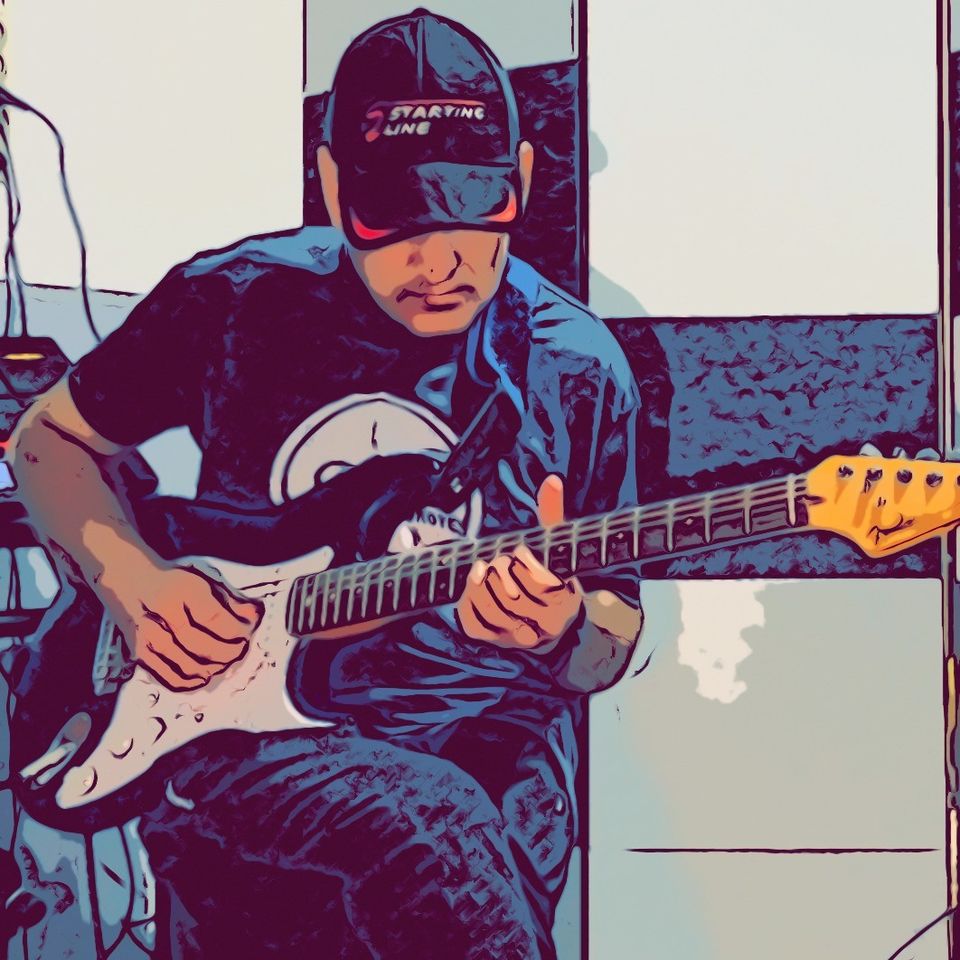

Omer B has built a significant part of his artistic identity around collaboration, working with musicians from across the world. On “Bending Time,” he leans fully into that instinct. The track brings together guitar virtuoso Oz Noy, drummer Oded Kafri, bassist Andy Warner, and Abramo Riti on Hammond organ, giving Omer B a formidable cast for what he does best: composing exceptionally good music.
“Bending Time” is a high energy, five minute instrumental funk rock piece that establishes its character almost immediately. Omer B’s guitar locks in with Kafri’s forceful drumming from the opening stretch, creating an intro that feels urgent, muscular, and inviting. Once the Hammond and bass enter the picture, the arrangement opens up into something richer and more expansive.
That introduction builds tension quickly while setting a steady sense of anticipation. You can hear the rhythm gathering momentum as the groove takes hold. At its core is a relentless, head bobbing funk rock backbeat. The pace is fast, yet the players remain firmly in the pocket, giving the song a driving foundation that keeps it moving at full speed without sacrificing its groove.
As composer, Omer B acts as the track’s anchor. He resists overcrowding the arrangement with constant shredding, choosing instead to work through sharp, syncopated rhythm chops and clearly defined melodic motifs. His guitar helps shape the song’s architecture, from its central themes to the heavy, overdriven chord progressions that guide each transition.
Oz Noy’s entrance raises the temperature. He slips naturally into the established groove, echoing the track’s hauntingly familiar melodic cadence while bringing in a streak of “twisted blues” character. His solos are explosive without feeling detached from the arrangement, and they push the song into a higher gear.
The interplay becomes especially satisfying when Noy’s lead lines careen over Omer B’s heavy rock foundation. Kafri’s airtight drumming, Warner’s bass, and Riti’s Hammond keep the music grounded while the guitars add a fiery improvisational edge. That tension gives “Bending Time” a sense of motion that suits its title.
Unpredictable, futuristic, and haunting, “Bending Time” plays like an exhilarating experiment that draws strong performances from everyone involved. Omer B’s experience as an amateur race driver also seems to surface in the track’s polished, high octane momentum. There is a clear feeling of speed, control, and mechanical precision running through the performance.
By the end, the vintage rock swagger and modern fusion sophistication feel naturally connected. In my professional opinion, they should “frame the arrangement!”
Connect with Omer B
Official Website
Instagram
Facebook
YouTube
Spotify
Apple Music
MUSIC
DJ PAPPY’s “Offside Trap” Turns Three Lions Belief Into A Chant Ready World Cup Rallying Cry For England

UK DJ, songwriter, and producer DJ PAPPY steps directly into football fever with “Offside Trap,” an electrifying new single made to rally behind England, the Three Lions, during this year’s World Cup campaign. Driven by urban energy, electronic force, and a stadium-sized sense of occasion, the track captures the belief, pride, and nervous excitement of a nation allowing itself to dream again.
Built for terraces, fan zones, pubs, clubs, festivals, and living rooms full of hoarse supporters, “Offside Trap” arrives as a full-throttle declaration of belief. It taps into that rare football mood when a country starts to feel something special taking shape, when every tackle, goal, chant, and final whistle seems to carry a little historical weight.
The track opens with a minimal, hypnotic, commanding melody that pulls the listener in immediately. The rawness of the intro feels deliberate, giving each note space while letting the tension build through restraint. It recalls the alluring opening of “Seven Nation Army” in spirit, though DJ PAPPY gives the idea his own melodic texture and personality. There is a gripping, chant-like quality here that football fans will instinctively understand, while the production remains firmly tied to his own energy and modern instincts.
From there, a march-like rhythm takes hold, setting the stage for enchanting male vocals that echo the spirit of the Three Lions’ roar. The performance feels confident, infectious, and emotionally charged, catching the pride of supporters who have carried England through decades of hope, heartbreak, and renewed belief. This time, the feeling seems different. This time, the dream feels alive.
Musically, “Offside Trap” brings together urban hip-hop cadence, electronic pulse, dance-driven momentum, and strong anthemic vocal harmonies. The result lands with streetwise swagger and stadium impact in equal measure.
The hook is where the song fully becomes a World Cup anthem. Big, communal, and hard to shake, it invites listeners to sing, clap, chant, and give themselves over to the moment. “Offside Trap” carries that unmistakable “olé, olé, olé” spirit, which makes it feel instantly at home wherever football fans gather to celebrate.
Arriving as excitement around the Three Lions reaches fever pitch, especially after that heart-racing 3-2 knockout win against Mexico, “Offside Trap” feels like the soundtrack to a nation standing on the edge of something unforgettable. The joy is real. The belief is growing. The chants are getting louder.
With “Offside Trap,” DJ PAPPY delivers what a great football anthem needs: energy, unity, pride, and a hook that stays in your head. It is a rallying cry for the fans, a celebration of the squad, and a reminder that when music and football collide, unforgettable moments can follow.
“Offside Trap” is available now on major streaming platforms.
Connect Online
TikTok: DJ Pappy Essex
Instagram: Life of a Property Developer
-

 MUSIC3 months ago
The Traveling High Priest delivers a transcendental anthem featuring the phenomenally gifted Jhonni Blaze
-

 MUSIC2 months ago
Michael M Jeni Turns Heartbreak Into Self Respect And Quiet Release On New R&B Single “Played”
-

 MUSIC2 months ago
DJ PAPPY’s “Offside Trap” Turns Three Lions Belief Into A Chant Ready World Cup Rallying Cry For England
-

 MUSIC3 months ago
KING TYGUSS turns faith into a battle cry on the commanding new single “Made For This Moment”
-
 MUSIC7 hours ago
Serag Baddar Revisits a Teenage Guitar Idea With Intimacy and Patience on the Atmospheric Post Rock Track “Limerence”
-
 MUSIC8 hours ago
Omer B Channels Groove, Speed, and Collaborative Fire on the Exhilarating Funk Rock Instrumental “Bending Time”


