
MUSIC
Award-Winning NYC Artist, Producer, and Filmmaker Richard Oliver Jr. Confronts the Harsh Reality of Handgun Violence With His Song and Film, “These Sad Times.”


Imagine an innocent kid waking up every day, dressing up for school, taking their breakfast, and hopping on the school bus and going to school with the looming feeling, maybe somewhat inconceivable to them, that it may actually be their last day at school because a lunatic somewhere could get any kind of gun he wishes just because he can, get into a school, and start shooting anyone indiscriminately. As you let the thoughts haunt you, just remember this is the reality America has been confronted with, and yet, it seems the issue remains unresolved.
This is a reality that award-winning filmmaker, artist, producer, and actor Richard Oliver Jr. has tried to wrap his head around, but every time he ends up feeling deeply frustrated with the USA, its government, and society at large.
How the most powerful nation on earth has failed to contain one of its single greatest threats, gun violence, remains a mystery to those observing from abroad and its citizens, including individuals like Richard Oliver Jr.
Something needs to change, and it is this actuality that motivated Richard Oliver Jr. to create “These Sad Times”- a reggae-conscious song and film that addresses the grave issues of gun violence and especially its colossal impact on vulnerable and innocent school-going kids.
With his pure voice that carries the raw emotions triggered by these tragic events, the hurt, and the shockwaves of gun violence, Richard takes us on a journey that confronts us with this grim reality.
The reality of innocent and vulnerable children in class, the reality that teachers, caregivers, and parents are also innocent victims; the reality of losing a dear child to gun violence!
The film delves deep into the harsh reality, visually and audibly demonstrating the devastating effects of gun violence—a single shot’s massive damage.
This is the time to act—we have to do something now to keep not only this generation safe but the future generations, lest they inherit a mad, unsafe, and atrocious world!
“These Sad Times”- the song and film—are available for streaming on major digital platforms.
Follow the attached link, subscribe to Richards’s Therhyme Impersonator channel, support this music and film, share it widely, and sign the #marchforourlives petition below it to support this cause.
Catch Up With Richard Oliver jr. on:



MUSIC
3B Rich Bring Confidence and Late Night Ambition Into Focus On the Sleek and Hypnotic New Single “Slow Twerking”
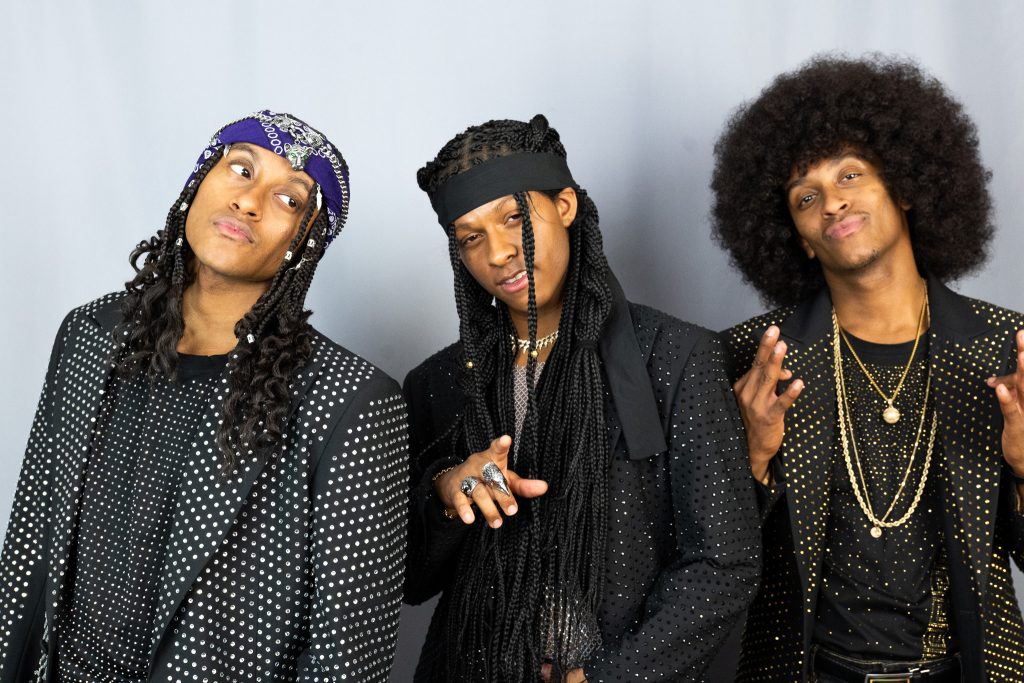
Afro Brazilian trio 3B Rich keep sharpening their place in contemporary music with the release of their latest single, “Slow Twerking.” Blending modern R&B, hip hop, and pop with an easy sense of control, the song lands as a hypnotic, club minded track full of cinematic detail and an undeniable groove.
Driven by smooth, pulsing production and airy synth work, “Slow Twerking” reaches beyond the usual dancefloor rush. There is a real story inside it. The track sketches the life of a dancer moving through the nightlife world, holding onto her confidence, resilience, and ambition. Through vivid lyrics, 3B Rich present a woman who commands attention while working toward something larger, supporting her child, investing in her education, and building a future for herself on her own terms.
A big part of the song’s appeal comes from the way the group handles its vocals. Brothers Hi-en, Mr. Spotlight, and J-Royal play off one another with the kind of chemistry that makes the track feel loose and precise at the same time. Verses, hooks, and melodies pass naturally between them. Each voice has its own character, but together they create a polished, unified sound. The hook stays with you, long after the song ends.
On the production side, “Slow Twerking” captures what makes 3B Rich stand out. They move between genres with care, never losing the emotional pull or rhythmic focus of the song. The layered arrangement, sharp sense of rhythm, and melodic immediacy make it easy to imagine the track thriving both on streaming platforms and in a live setting.
The single also arrives at an important point for the trio. As attention around “Slow Twerking” continues to build, 3B Rich are wrapping up work on their debut album. The project is expected to push further into the ideas introduced here, with more genre blending, stronger storytelling, and adventurous production choices. It speaks to the group’s drive to test their range while staying grounded in something genuine.
Originally from Los Angeles and now based in Las Vegas, 3B Rich bring a distinct West Coast feel that is shaped by broader global influences. Their music is marked by tight harmonies, a strong stage presence, and a creative vision that connects different sounds and cultural perspectives. As their catalog grows, so does the sense that they are becoming a genuinely forward looking act, one with the potential to leave a real mark on pop and urban music.
With more releases, live shows, and industry partnerships ahead, 3B Rich are moving steadily from rising talent to serious creative contender.
“Slow Twerking” is available now on all major streaming platforms.
For the latest music, video releases, and tour updates, follow 3B Rich on YouTube, Instagram, and TikTok.
MUSIC
In Sylk McCloud’s Safeword, Bedroom R&B Meets Club Heat as Mr.24 Adds Grit to Bubu’s Midnight Pulse

Rising bedroom R&B crooner Sylk McCloud, hailing from SE Washington, DC, turns up the temperature on his latest single, “Safeword.” It’s a slow burner built for the club, where glossy modern R&B melts into a little hip hop swagger. BuBu The Producer keeps the track sleek and plush, while featured rapper and emcee Mr.24 slides in with a verse that sharpens the edge.
Right away, “Safeword” lands in that moody late night pocket. The instrumental is velvet smooth, but it moves with a steady, hypnotic groove that nudges you closer. Sylk sings like he’s speaking directly across a dark room, soft in tone yet sure of himself. That push and pull is the point, a mix of vulnerability and control, desire and hesitation, all held in tension without spilling into melodrama.
The song takes its cues from the “Shades of Grey” film series, leaning into trust, fantasy, and the charged negotiation that comes with intimacy. Sylk makes the hook the centerpiece, letting the melody do the seducing even as the lyrics get bold:
“Tell me you’re sexy, all positions go
Are you ready for submission
Fifty shades is what I’m giving
Satisfaction all positions
Only one thing missing
Tell me your safeword…”
Those lines set the mood with a teasing confidence that never feels rushed. The chorus is restrained and tempting, built to linger rather than hit and disappear. Sylk’s voice floats above the beat with a magnetic ease, so the hook sticks in your head and in your gut.
When Mr.24 arrives, the energy shifts without breaking the spell. His delivery brings a gritty smooth contrast to Sylk’s melodic glide, grounding the fantasy in something a little tougher. It’s a smart pairing. The two artists sound comfortable sharing the same space, which helps “Safeword” work in more than one setting, from a packed dance floor to a late night playlist you keep to yourself.
A lot of the track’s pull comes from the production choices. BuBu The Producer builds a lush, atmospheric soundscape that matches Sylk’s tone, leaving room for breath, for pause, for that moment before the next touch. It feels designed for slow dancing, for cruising through the city after midnight, or for setting the room’s temperature with intention.
With “Safeword,” Sylk McCloud keeps carving out his lane in contemporary R&B, blending emotional weight with sensual confidence. The single plays like a small, cinematic scene, intimate on purpose, polished without feeling distant.
“Safeword” is now available on all major streaming platforms.

Screenshot
Some artists slide into a scene and hope the room makes space. Killem KD walks in like the room is already hers. Listen.
On her one take freestyle “Trouble Man (One Take),” the Mound Bayou, Mississippi native makes a clean announcement. She is here, she is ready, and she is finished waiting on permission. In about 1 minute and 25 seconds, KD delivers something that feels closer to a notice than a warm introduction, a warning shot aimed at anyone treating her like background noise.
Her intent is obvious in the way she hits each line. When she raps, “said I’m tired of waiting in corners and closets, it’s my time to shine, I can’t be quiet,” it lands like autobiography, not bravado. This is presence music, the kind that changes the temperature of a track. KD performs like she can feel eyes on her, like the tally is being kept, like silence has stopped being an option. Doubt, gatekeepers, anyone trying to flatten her momentum, they all get drowned out by the force in her voice.
The flow is slick and surgical, rooted in the South and proud of it. Every bar locks into the beat with a cadence that sounds fused, not rehearsed. You hear finesse, then grit right behind it, swagger sharpened by hunger. She stays patient. She doesn’t chase the pocket. She lives in it. The whole thing reads like instinct, not homework.
The video sharpens that feeling. Filmed guerrilla-style outside an old hospital building, it strips the moment to essentials: Killem KD, a mic, and whatever the day gives her. No crew lights. No studio polish. No safety net. Just daylight, concrete, and conviction. A dangling silver microphone adds a throwback touch, nodding to a time when you could measure an MC by breath control and bars.
That location matters, too. Hospitals are where people show up broken, hurting, trying to make it through. KD stands just outside that threshold and spits like she’s the diagnosis, unavoidable, contagious, impossible to dismiss. She closes her eyes at points, letting the performance swing between confession and confrontation. The result feels street-level and cinematic at once, early freestyle energy filtered through quiet urban melancholy.
“Trouble Man (One Take)” doesn’t lean on spectacle. It leans on certainty. KD knows what she brings, and she moves like her moment isn’t on the way. It’s here. This puts her in the lane of artists who demand recognition because the work leaves no other option.
Born and raised in the Delta, Killem KD carries southern soul, raw storytelling, and fearless energy into every bar. She’s pushing to put Mississippi on the map, and a clip like this makes that goal feel less like ambition and more like trajectory.
No edits.
No excuses.
No permission needed.
This is Killem KD, trouble in the best way possible.
Connect with Angelee:
| Website | TikTok | Facebook | Instagram | X |
-
 MUSIC2 months ago
Killem KD Brings Delta Grit to a One Take Freestyle That Sounds Like a Warning and a Promise
-

 MUSIC3 months ago
Angele Lapp Brings Quiet Conviction to Hale’s “Kung Wala Ka”, Turning a Beloved Breakup Song Into Something Personaltitl
-

 MUSIC2 months ago
In Sylk McCloud’s Safeword, Bedroom R&B Meets Club Heat as Mr.24 Adds Grit to Bubu’s Midnight Pulse
-
 MUSIC2 weeks ago
3B Rich Bring Confidence and Late Night Ambition Into Focus On the Sleek and Hypnotic New Single “Slow Twerking”


